The Ultimate Guide to Portugal's Cultural Golden Visa in 2026
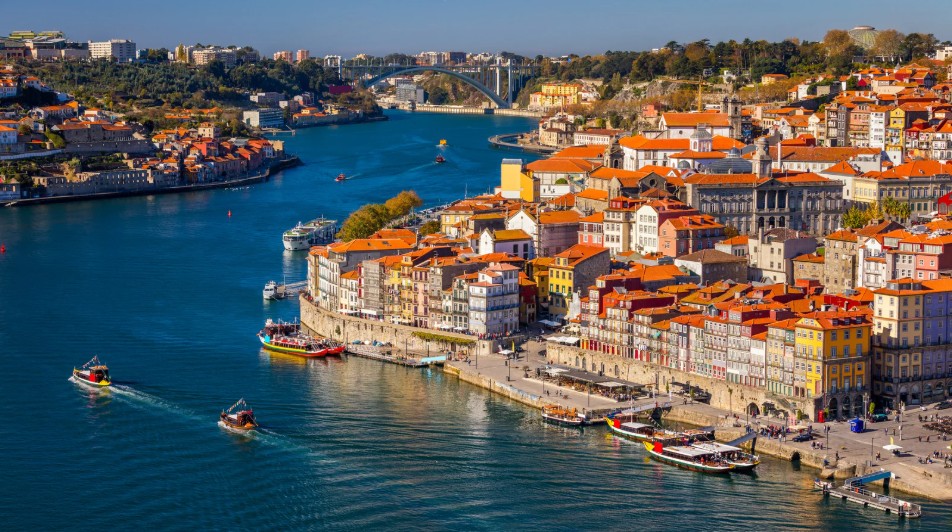
Portugal's Cultural Golden Visa is one of the most distinctive residency-by-investment routes left in Europe, offering a place in the country's Golden Visa program in exchange for a donation to arts and heritage rather than a purchase of property or fund units.
Demand for the wider program remains strong: in 2025, foreign investment into Portugal's Golden Visa investment funds reached a record €732 million (Source: The Portugal News).
That momentum matters for anyone weighing the cultural route today.
At Bitizenship, we help Bitcoin-aligned investors and global families understand every Portuguese pathway before committing capital, so this guide breaks down what the cultural option involves, who it suits, and how it compares to an investment-based route.
Key Takeaways
- Portugal's Cultural Golden Visa grants EU residency through a non-recoverable cultural donation.
- The donation is typically €250,000, or €200,000 in low-density areas.
- Golden Visa holders stay only 14 days every two years.
- Bitizenship guides investors through Portugal's Cultural Golden Visa and fund alternatives.
- The route leads to permanent residency in five years, subject to requirements.

The 2026 Golden Visa Landscape: Why Portugal Still Stands Out
Europe's residency-by-investment map has been redrawn over the past three years. Spain abolished its Golden Visa in 2025, Ireland closed its program in 2023, and Greece tripled its Athens property threshold to €800,000.
Portugal responded differently: it removed real estate from its Golden Visa in October 2023 but kept the program alive through investment funds, cultural donations, scientific research, and job creation.
The result is a program that is smaller but arguably more focused on genuine economic and cultural contribution. Investors who once bought Lisbon apartments now channel capital into regulated funds and national heritage instead.
- Real estate is no longer a qualifying route anywhere in mainland Portugal.
- Investment funds and cultural donations are now the headline options.
- Foreign appetite is holding firm despite tighter rules and long processing queues.
For readers comparing options, it helps to understand how each surviving route fits different goals, something we map out in detail across our Portugal residency program resources. The cultural route occupies a specific niche within this new landscape.
What Is Portugal's Cultural Golden Visa?
Portugal's Cultural Golden Visa is the branch of the country's Golden Visa program that grants residency in return for a qualifying donation supporting artistic production or the recovery and maintenance of national cultural heritage.
Unlike the fund route, this is a contribution, not an investment: the capital is not designed to be returned, and there are no shares, units, or expected financial upside.
The donation is generally set at €250,000, reduced by 20% to €200,000 when the supported project sits in a low-density territory. Contributions are typically channelled through recognised public cultural bodies or accredited heritage entities, and applicants receive the same core Golden Visa benefits as other routes.
- Grants temporary residency with a pathway to permanent residency.
- Provides visa-free Schengen travel across 27 countries.
- Requires only 14 days of physical presence every two years.
- Allows family members, including spouse and dependent children, to be included.
Because the donation is non-recoverable, the cultural route trades financial return for simplicity, a tradeoff we explore further in our overview of the Portugal citizenship pathway.
Who Portugal's Cultural Golden Visa Is Built For
Portugal's Cultural Golden Visa is designed for people who prioritise mobility, family security, and a clean, low-maintenance structure over the possibility of a financial return. If the goal is European optionality rather than portfolio growth, a one-time donation can be an efficient way in.
As Alessandro Palombo, Co-Founder of Bitizenship, puts it:
"Most people save for a second home. The smartest ones save for a second passport. One gives you a better view. The other gives you and every generation after you options no amount of money can buy later."
- Global families seeking Schengen access without full relocation.
- Philanthropically minded investors comfortable with a non-recoverable gift.
- Applicants who value administrative simplicity over investment exposure.
- Individuals building a long-term hedge for freedom and mobility.
For many of these buyers, the deeper motivation is optionality, the same thinking behind broader second passport benefits that drive interest in Portugal. Understanding the process end to end is the next step.

Portugal's Cultural Golden Visa: A Step-by-Step Guide for 2026
Applying for Portugal's Cultural Golden Visa follows the same administrative spine as other Golden Visa routes, with the donation replacing an investment transfer. The timeline below reflects current processing realities, including AIMA's biometric backlog.
You do not navigate this alone: qualified immigration lawyers handle the filings, and our team coordinates the process, as outlined in our Portugal program FAQs.
Step 1: Define Objectives and Confirm Eligibility
Clarify what you are optimising for: residency and Schengen access, family security, or an eventual passport. Applicants must be non-EU/EEA/Swiss nationals, be at least 18, and hold a clean criminal record. This stage shapes every later decision, including whether the cultural route or an investment route fits better.
Step 2: Prepare Documentation and Portuguese Setup
Gather personal documents, obtain a Portuguese tax number (NIF), and open a Portuguese bank account. You will also appoint a lawyer through a power of attorney so filings can proceed while you remain abroad.
Estimated time: around two months.
Step 3: Identify a Qualifying Cultural Project
Work with accredited cultural or heritage bodies to identify a project that qualifies under the artistic production or heritage preservation criteria. Confirming eligibility of both the project and the receiving entity is essential before any funds move.
- Verify the project qualifies under current cultural heritage rules.
- Confirm whether it sits in a low-density area (reducing the amount to €200,000).
- Obtain written confirmation from the receiving cultural entity.
Step 4: Make the Donation and Submit the ARI Application
Transfer the qualifying donation and submit the residence-by-investment (ARI) application online, attaching proof of the contribution and your supporting documents.
Estimated time: roughly one week to file once documents are ready.
Step 5: Biometrics Appointment with AIMA
Travel to Portugal for fingerprinting and identity verification with AIMA, the authority administering the program. This appointment is currently the main bottleneck.
Estimated time: 11 to 15 months based on 2024 to 2025 data.
Step 6: Hold and Renew the Residence Permit
Once issued, the residence card unlocks Schengen travel, healthcare and education access, and the right to work in Portugal. You maintain it by meeting the light 14-days-every-two-years stay requirement and renewing on schedule.
Step 7: Permanent Residency and Citizenship Pathway
After five years of legal residence, holders can apply for permanent residency, subject to A2 Portuguese, a clean record, and other criteria. Permanent residency is then followed by a pathway to citizenship, framed against Portugal's nationality rules, which were revised in 2026 and can affect when the citizenship clock begins.

Costs and Fees to Budget For in 2026
Beyond the headline donation, Portugal's Cultural Golden Visa carries government and professional fees that applicants should budget for from the outset. Treating the donation as the only cost is a common planning error.
- The cultural donation itself: €250,000 standard, or €200,000 in low-density areas.
- Government application, approval, and renewal fees payable to AIMA.
- Legal and administrative fees for immigration counsel and filings.
- Biometrics, document legalisation, translation, and apostille costs.
Because the donation is non-recoverable, the effective cost of the cultural route is the full contribution plus fees, with no expected return. Investors who want their capital to remain at work often compare this against a Golden Visa fund route, which is structured very differently.
Cultural Route vs the Fund Route: Which Fits You
The clearest way to understand Portugal's Cultural Golden Visa is to compare it with the fund route, since both lead to the same residency benefits through different mechanics. The cultural route is a donation; the fund route is an investment.
Bitizenship's Portugal Fund is a Golden Visa-eligible private equity fund that requires a €500,000 investment into a fully owned Portuguese company focused on the Bitcoin ecosystem. Unlike a donation, an investment may return capital and can generate annual distributions upon an assembly vote, while giving investors exposure to Portugal's Bitcoin ecosystem.
Returns are not guaranteed, and private equity risk applies.
- Cultural route: lower entry (€200,000 to €250,000), no return, maximum simplicity.
- Fund route: higher entry (€500,000), investment structure, Bitcoin ecosystem exposure.
- Both: 14 days every two years, family inclusion, Schengen access, five-year PR pathway.
If you want European residency while keeping your capital aligned with Bitcoin rather than gifting it away, our Bitcoin Ecosystem Golden Visa fund is worth reviewing alongside the cultural option.
Risks, Compliance, and Common Mistakes to Avoid
Portugal's Cultural Golden Visa is compliant and well established, but applicants still stumble on avoidable issues. Careful preparation protects both your timeline and your investment migration goals.
- Assuming the donation is recoverable: it is not, so treat it as a permanent contribution.
- Underestimating processing times: AIMA biometrics can take 11 to 15 months.
- Weak source-of-funds documentation: prepare a complete, lawful paper trail early.
- Confusing permanent residency and citizenship timelines: they are separate and evolving.
Getting the framing right matters, especially as European rules tighten, a trend documented in our Wealth Migration Report. Working with experienced advisors is the simplest way to avoid these pitfalls.

Conclusion
Portugal's Cultural Golden Visa remains one of Europe's most flexible residency routes in 2026, exchanging a donation to arts and heritage for EU residency, Schengen mobility, family inclusion, and a five-year pathway to permanent residency and, in time, citizenship.
It suits applicants who value simplicity and mobility over financial return, and it sits alongside investment-based routes for those who want their capital to keep working.
Whichever direction fits your goals, choosing well means understanding the tradeoffs before you commit, not after.
Get in touch with Bitizenship’s team to map the cultural route and its alternatives against your own objectives.
Read Next:
- Best Alternatives to Real Estate for EU Residency in 2026
- 5 Reasons Italy's Investor Visa Never Included a Real Estate Route
- Real Estate Golden Visa Taxes Explained: What Property Investors Pay Across Europe
FAQs:
1. What is Portugal's Cultural Golden Visa in 2026?
Portugal's Cultural Golden Visa is the branch of Portugal's Golden Visa program that grants EU residency in return for a qualifying donation supporting artistic production or the maintenance of national cultural heritage. It carries the same core benefits as other routes, including Schengen access and a five-year permanent residency pathway. Bitizenship helps applicants assess whether the cultural route or an investment route better fits their goals.
2. How much does Portugal's Cultural Golden Visa cost?
Portugal's Cultural Golden Visa generally requires a donation of €250,000, reduced to €200,000 when the supported project sits in a low-density territory. On top of the donation, applicants budget for government, legal, and administrative fees, and the contribution is non-recoverable. Bitizenship helps investors weigh this full cost against fund-based alternatives before committing.
3. Does Portugal's Cultural Golden Visa lead to citizenship?
Portugal's Cultural Golden Visa provides a pathway to permanent residency after five years of legal residence, followed by a pathway to citizenship, subject to language, residency, and integration requirements. Citizenship is never automatic or guaranteed, and Portugal's nationality rules were revised in 2026. Bitizenship helps clients understand how these timelines apply to their specific situation.
4. How is Portugal's Cultural Golden Visa different from the fund route?
Portugal's Cultural Golden Visa is a non-recoverable donation, while the fund route is an investment that may return capital and generate distributions. The cultural route has a lower entry point of €200,000 to €250,000, whereas Bitizenship's Portugal Fund requires a €500,000 investment with exposure to Portugal's Bitcoin ecosystem. Bitizenship structures the fund route for investors who prefer to keep their capital working.
5. How long does Portugal's Cultural Golden Visa take to process?
Portugal's Cultural Golden Visa timeline currently depends heavily on AIMA's biometric appointment backlog, which has run around 11 to 15 months based on 2024 to 2025 data. Document preparation typically takes about two months before filing. Bitizenship coordinates the process with immigration lawyers so applicants can move as efficiently as the current queues allow.
Disclaimer:
This article is published by Bitizenship for informational and educational purposes only. It reflects Bitizenship's perspective on the investment migration market and is not intended as legal, tax, immigration, investment, or financial advice, nor as an offer or solicitation to subscribe to any investment product. Comparisons with other firms are based on publicly available information and our own assessment of structural differences in business models. We have aimed for accuracy, but descriptions of programs, regulations, and competitor offerings are necessarily summaries and may not capture every legal nuance. Program terms, eligibility criteria, processing times, tax regimes, and regulatory frameworks change frequently and vary by individual circumstances. The Bitcoin Dolce Visa involves an equity investment in Bitizenship Italia S.r.l., an Italian private company. Any investment decision should be made only after reviewing the official documentation and consulting independent legal, tax, and financial advisors qualified in the relevant jurisdictions. Past performance does not guarantee future results. Capital is at risk. Residency and citizenship outcomes depend on meeting all legal, language, residency, and integration requirements set by the relevant authorities and are never guaranteed. Always refer to official government and regulatory sources, and engage qualified professionals before acting on any information in this article.
Gain residency and citizenship for you and your family. Enjoy the freedom to live, work, do business.
