Portugal Golden Visa Investment Fund Route Explained: €500,000 Minimum, CMVM Rules, and the 60% Requirement

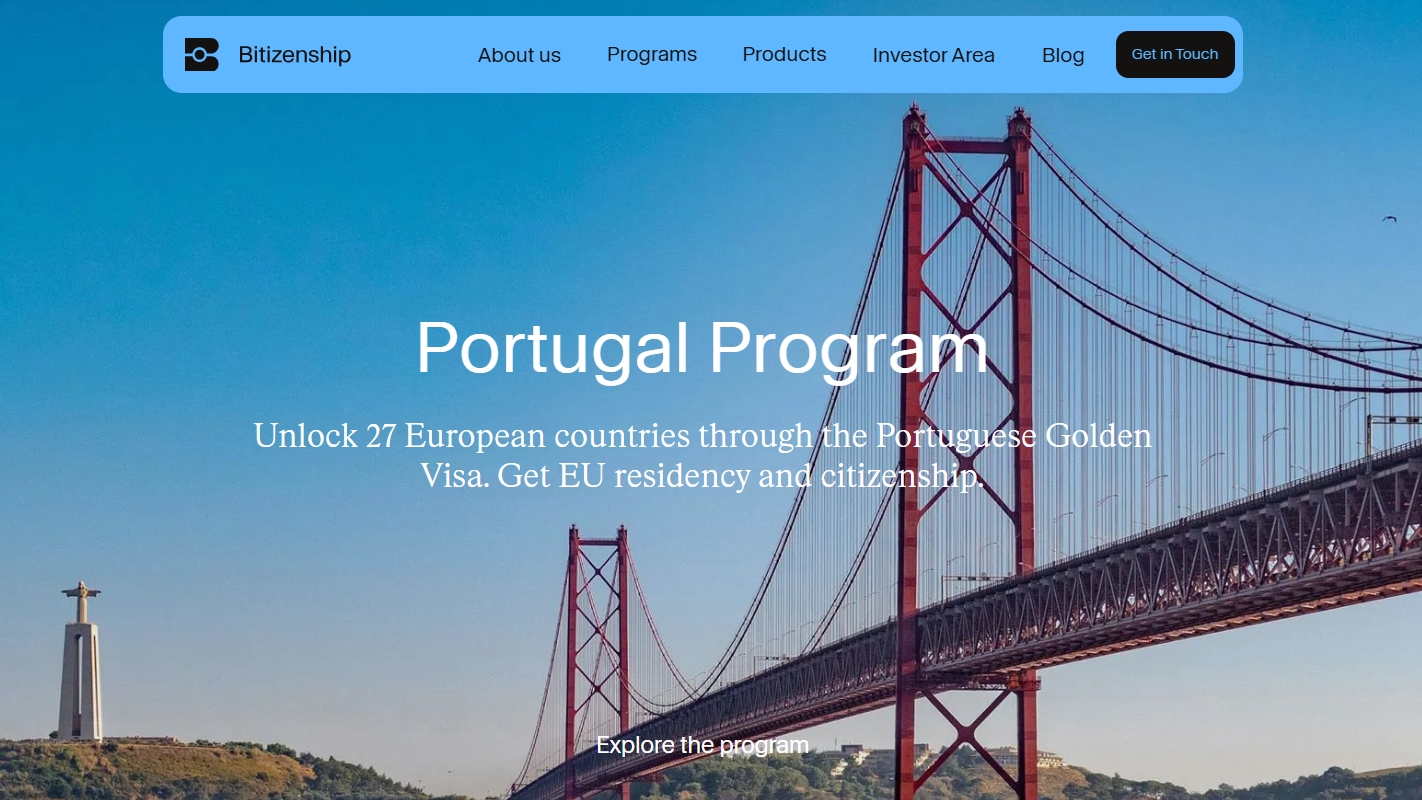
The Portugal Golden Visa investment fund route has become the default pathway to Portuguese residency for non-EU investors since real estate was removed from the program in October 2023.
Portugal's migration agency granted nearly 5,000 Golden Visa residence permits to investors and family members in a single recent year and has pledged to clear the program's remaining backlog during 2026 (Source: AIMA).
Behind that momentum sits a precise legal framework: a €500,000 minimum qualifying investment, mandatory supervision by the Portuguese Securities Market Commission (CMVM), a minimum five-year fund maturity, and the rule that at least 60% of the fund's capital must be invested in companies headquartered in Portugal.
This guide breaks down exactly how each requirement works, what it means for your application, and how Bitizenship structures a Golden Visa-eligible private equity fund pathway connected to Portugal's Bitcoin ecosystem within these rules.
Key Takeaways
- The Portugal Golden Visa fund route requires a €500,000 qualifying investment.
- Qualifying funds must be CMVM-regulated with a minimum five-year maturity.
- At least 60% of fund capital must go to Portugal-headquartered companies.
- Bitizenship's Portugal Fund is a Golden Visa investment fund route with Bitcoin ecosystem exposure.
- Permanent residency eligibility comes after 5 years, with citizenship as a later pathway.
Why the Fund Route Now Dominates Portugal's Golden Visa
Portugal's Golden Visa looked very different before 2023, when the vast majority of applicants qualified by purchasing property. The Mais Habitação reform removed real estate and large unrestricted capital transfers from the eligible investment list, and regulated funds absorbed most of the demand that real estate left behind.
Several forces explain why the fund route took over so decisively:
- Real estate and real estate-linked funds were fully excluded from eligibility in October 2023.
- Regulated funds offer professional management with no property maintenance, tenants, or municipal taxes.
- Investors can complete the entire subscription and application process remotely through legal representatives.
- The stay requirement remains minimal, so the route suits investors who do not plan to relocate.
- Fund investments are auditable and transparent, which simplifies compliance reviews.
The result is a market where fund selection, not property selection, is now the core investment decision, and where understanding the Golden Visa fund landscape is the first step for any serious applicant.
What CMVM Regulation Actually Means for Investors
Every qualifying Golden Visa fund operates under the supervision of the Comissão do Mercado de Valores Mobiliários, Portugal's securities market regulator. CMVM oversight is not a marketing badge: it imposes a continuous compliance framework on the fund and its manager.
In practice, CMVM regulation means the fund must:
- Be managed by an authorized management company registered with the regulator.
- Appoint an independent depositary bank to hold fund assets.
- Undergo audits by an independent, recognized auditor.
- Report net asset valuations and comply with transparency and disclosure rules.
- Operate within the investment policy defined in its constitutive documents.
For context, Bitizenship's Portugal Fund is authorized by the Portuguese Securities Market Commission under authorization Nr. 2089, is managed by 3 Comma Capital S.C.R., uses Bison Bank as depositary, and is audited by BDO.
That layered structure of regulator, manager, depositary, and auditor is exactly what the fund route's five phases are built on, and it is what separates a compliant Golden Visa vehicle from an unregulated private placement.
The €500,000 Minimum: How the Qualifying Investment Works
The legal threshold for Golden Visa eligibility through the fund route is a capital transfer of €500,000 or more into units of a qualifying non-real estate collective investment scheme constituted under Portuguese law. This figure did not change with the 2023 reform, and it applies specifically to the fund category.
Key mechanics of the €500,000 requirement:
- The funds must be transferred from a foreign bank account into Portugal through compliant banking rails.
- The investment cannot be made in Bitcoin or any cryptocurrency; it must be a euro-denominated transfer, a point covered in depth in this Bitcoin payment explainer.
- The €500,000 may be split across more than one qualifying fund, provided each fund independently meets all eligibility criteria.
- The investment must be maintained throughout the residency period until permanent residency eligibility.
- A fund may show a lower commercial minimum for non-visa investors (Bitizenship's fund documents show a €100,000 minimum), but Golden Visa eligibility always requires the full €500,000.
Investors should also budget beyond the headline number: government application fees set by AIMA, personal legal assistance, and fund-level costs such as management fees are separate expenses on top of the qualifying capital.
The 60% Requirement: The Rule That Defines Eligibility
The 60% requirement is the provision that ties the Golden Visa fund route to the Portuguese economy. Under the immigration law's fund category, at least 60% of the value of the fund's investments must be made in commercial companies with their registered office in Portugal.
Here is what that rule means in practice:
- The fund's portfolio must be anchored in Portugal-headquartered companies, not foreign assets with a Portuguese wrapper.
- The remaining portion of the portfolio may be allocated to other eligible assets, depending on the fund's strategy and documents.
- Fund managers issue a declaration attesting to the capitalization plan, the minimum five-year maturity, and the application of at least 60% of the investment in companies with head office in Portugal; this declaration forms part of the visa file.
- A fund that drifts below the 60% allocation risks its qualifying status, which is why allocation discipline matters as much at year four as at subscription.
- Investors should request written confirmation from the manager that the requirement is met before subscribing.
Bitizenship's Portugal Fund is structured cleanly against this rule: it is a private equity fund investing in a fully owned local Portuguese company, a research and investment entity focused solely on the Bitcoin ecosystem.
Because the portfolio company is 100% owned by the fund and headquartered in Portugal, the structure aligns directly with the allocation logic the law demands, while giving investors exposure to Bitcoin through the company's activities rather than through a direct Bitcoin purchase.
You can read a full breakdown of the structure in this complete Bitizenship Portugal fund overview.
The Other CMVM-Linked Eligibility Rules You Cannot Skip
The 60% allocation is the most discussed rule, but it sits alongside other statutory conditions that a fund must satisfy for your application to qualify. Missing any one of them disqualifies the investment, regardless of how strong the fund is commercially.
The full eligibility checklist for a qualifying fund:
- CMVM registration and supervision, verifiable through the regulator's public records rather than the fund's own marketing.
- A minimum maturity of five years at the time of your investment, which is why most qualifying funds run seven to ten year terms.
- No real estate exposure, direct or indirect, in the fund's investment policy.
- Constitution under Portuguese law as a collective investment scheme.
- The manager's declaration confirming the capitalization plan, maturity, and 60% allocation.
One nuance worth underlining: a fund being listed with CMVM does not automatically make it Golden Visa-eligible. The immigration criteria are a separate layer on top of securities regulation, so your immigration lawyer should verify both.
Bitizenship's fund was built for this dual test from inception in May 2024, as a closed-ended vehicle structured until 2032 with a €30 million fundraising cap, and it sits within a broader map of active European programs where Portugal's fund category remains one of the few regulated, return-seeking routes left.

From Subscription to Residence Card: The Process in Practice
Once you have selected a qualifying fund, the application itself follows a defined sequence. The process is administrative but document-heavy, and preparation quality drives your timeline more than any other factor.
The typical sequence looks like this:
- Documents collection and setup: appoint an immigration lawyer, obtain a Portuguese tax number (NIF), and open a bank account, typically around 2 months.
- Invest and submit: transfer the €500,000 to Portugal, subscribe to the fund, and file the Golden Visa application online, roughly 1 week.
- Biometrics appointment in Portugal: travel for fingerprints and identity verification, with waits of 11 to 15 months based on 2024-2025 data.
- Hold the Golden Visa card and maintain the investment, meeting the stay requirement of just 14 days every two years.
- Apply for permanent residency after 5 years of residency, subject to A2 Portuguese, a clean criminal record, and other criteria.
Citizenship remains a consequential pathway after permanent residency, subject to Portugal's nationality law requirements, which were revised in 2026 and now apply longer timelines for most applicants.
The precise position depends on legislation in force when you apply, which is one more reason the Portugal program page pairs every investor with vetted legal partners rather than leaving the analysis to guesswork.
How Bitizenship's Portugal Fund Fits This Framework
Most qualifying funds channel capital into real-economy sectors like energy, hospitality, or generic private equity. Bitizenship's Portugal Fund takes a different position within the same legal framework: it is positioned as the first and largest Bitcoin Ecosystem Golden Visa Fund, built for investors whose conviction sits in Bitcoin rather than in traditional sectors.
What the fund offers within the CMVM and Golden Visa rules:
- A Golden Visa-eligible private equity structure investing in a fully owned Portuguese company focused on the Bitcoin ecosystem.
- Indirect Bitcoin ecosystem exposure through the portfolio company's research and investment activities, not a direct Bitcoin purchase on your behalf.
- A closed-ended term until 2032, monthly subscription, a 1.50% annual management fee, and a 10% performance fee.
- Annual profit distributions that may be possible at year-end, subject to an assembly vote.
- Family inclusion, Schengen access across 27 countries, and administrative support from Bitizenship's team with founder-led legal oversight.
"Bitcoin holders aren't a new type of investor. They're a new type of citizen. They think in decades, in optionality, in sovereignty. We built Bitizenship for that person." said Alessandro Palombo, Co-Founder of Bitizenship.
That philosophy is why the fund exists: it lets Bitcoin-aligned investors pursue Portuguese residency through a regulated vehicle instead of parking capital in assets that contradict their thesis.
Risks and Due Diligence Before You Invest
A Golden Visa fund is a real investment, not a fee for residency, and the fund route's regulatory framing does not remove investment risk. Treating due diligence seriously is the single best protection you have.
Points every investor should weigh before subscribing:
- Investing in a Web3-focused private equity fund carries inherent risks, and investors may lose the entire invested capital.
- Blockchain markets are volatile, and regulatory uncertainty can disrupt operations or reduce returns.
- Limited liquidity and exit challenges may delay or reduce realized returns; closed-ended funds lock capital for the fund term.
- The cost structure includes fixed expenses such as the 1.5% annual management fee, plus separate Golden Visa government fees and personal legal costs.
- Returns are not guaranteed, distributions depend on performance and assembly votes, and residency outcomes are subject to legal requirements.
Verify the manager's CMVM authorization independently, read the official fund documents in full, and engage qualified legal and tax advisors before transferring capital. Understanding property-era risk lessons also helps frame why the regulated fund model became the preferred structure in the first place.
Fund Route vs. the Alternatives Still on the Table
The fund route is dominant, but it is not the only remaining option in Portugal, and it is worth knowing what you are choosing between. Portugal's post-2023 menu also includes cultural donations, scientific research contributions, and job creation routes, while other countries run entirely different models.
How the fund route compares:
- Cultural donations start lower but are non-recoverable; the fund route is the main option with potential capital return and upside.
- Research and job-creation routes involve operational complexity that most passive investors do not want.
- Italy's Investor Visa, by contrast, runs on a €250,000 equity investment in an Innovative Startup rather than a fund, which is the structure behind Bitizenship's Italy program pathway, the Bitcoin Dolce Visa.
- Portugal's structural advantage remains its combination of a regulated fund vehicle, a 14-days-every-two-years stay requirement, and permanent residency eligibility after 5 years.
For investors comparing structures rather than countries, the essential distinction is simple: in the Portuguese framework, funds are the eligible investment; in Italy, the eligible route runs through a startup.
Both are valid eligible investments under their respective programs, and the fund vs. real estate comparison shows why Portugal's fund category holds up well on costs and taxes.
Conclusion
The Portugal Golden Visa investment fund route rests on a clear set of rules: a €500,000 qualifying investment, CMVM regulation with an authorized manager, depositary, and auditor, a minimum five-year fund maturity, and at least 60% of fund capital invested in companies headquartered in Portugal.
Master those four pillars and the rest of the process is execution: documents, biometrics, and maintaining the investment through to permanent residency eligibility at the five-year mark, with citizenship as a consequential later pathway subject to Portugal's nationality law.
Bitizenship's Portugal Fund was designed to satisfy every one of these requirements while giving Bitcoin-aligned investors exposure to Portugal's Bitcoin ecosystem through a regulated private equity structure.
Get in touch if you want to understand whether the fund route fits your mobility and investment goals.
Read Next:
- Does Buying Property in Portugal Give You Residency?
- Best Italian Cities to Relocate To in 2026
- Portugal Golden Visa Fund vs Real Estate
FAQs:
1. What is the Portugal Golden Visa investment fund route?
The Portugal Golden Visa investment fund route is a residency-by-investment pathway where a non-EU investor places €500,000 or more into a CMVM-regulated Portuguese fund that meets legal eligibility criteria, including a minimum five-year maturity and a 60% allocation to Portugal-headquartered companies. Bitizenship structures this pathway through its Portugal Fund, a Golden Visa-eligible private equity fund connected to Portugal's Bitcoin ecosystem.
2. How much do I need to invest in the Portugal Golden Visa investment fund route?
The qualifying minimum for the Portugal Golden Visa investment fund route is €500,000, transferred in euros from a foreign bank account into Portugal. Additional costs include government application fees, legal fees, and fund-level charges such as management fees. Bitizenship guides investors through the full cost picture and the subscription process with support from vetted legal and tax partners.
3. What is the 60% requirement in the Portugal Golden Visa investment fund route?
The 60% requirement means a qualifying fund in the Portugal Golden Visa investment fund route must invest at least 60% of its capital in commercial companies with their registered office in Portugal. The fund manager issues a declaration attesting to this allocation as part of the visa file. Bitizenship's Portugal Fund aligns with this rule by investing in a fully owned Portuguese portfolio company focused on the Bitcoin ecosystem.
4. Do funds in the Portugal Golden Visa investment fund route have to be CMVM-regulated?
Yes. Every qualifying fund in the Portugal Golden Visa investment fund route must be regulated by the Portuguese Securities Market Commission (CMVM), with an authorized management company, an independent depositary, and an independent auditor. Bitizenship's Portugal Fund is authorized by CMVM under authorization Nr. 2089, managed by 3 Comma Capital S.C.R., with Bison Bank as depositary and BDO as auditor.
5. Does the Portugal Golden Visa investment fund route lead to citizenship?
The Portugal Golden Visa investment fund route leads first to residency with a stay requirement of 14 days every two years, then to permanent residency eligibility after 5 years, subject to A2 Portuguese, a clean criminal record, and other criteria. Citizenship is a consequential later pathway governed by Portugal's nationality law and is never guaranteed. Bitizenship helps investors plan both stages with founder-led legal oversight and vetted professional partners.
Disclaimer:
This article is published by Bitizenship for informational and educational purposes only. It reflects Bitizenship's perspective on the investment migration market and is not intended as legal, tax, immigration, investment, or financial advice, nor as an offer or solicitation to subscribe to any investment product. Comparisons with other firms are based on publicly available information and our own assessment of structural differences in business models. We have aimed for accuracy, but descriptions of programs, regulations, and competitor offerings are necessarily summaries and may not capture every legal nuance. Program terms, eligibility criteria, processing times, tax regimes, and regulatory frameworks change frequently and vary by individual circumstances. The Bitcoin Dolce Visa involves an equity investment in Bitizenship Italia S.r.l., an Italian private company. Any investment decision should be made only after reviewing the official documentation and consulting independent legal, tax, and financial advisors qualified in the relevant jurisdictions. Past performance does not guarantee future results. Capital is at risk. Residency and citizenship outcomes depend on meeting all legal, language, residency, and integration requirements set by the relevant authorities and are never guaranteed. Always refer to official government and regulatory sources, and engage qualified professionals before acting on any information in this article.


Gain European residency and citizenship for you and your family. Enjoy the freedom to live, work, do business.
