Best Digital Nomad Visas in 2026: Income Thresholds, Tax Traps, and Which Ones Lead to Residency

The best digital nomad visas in 2026 are no longer judged on beaches and coworking cafés, but on three unglamorous variables: the income you have to prove, the tax residency you may accidentally trigger, and whether the years you spend on the permit count toward anything permanent.
More than 50 countries now offer a dedicated remote work visa as remote work reshapes global mobility (Source: Forbes), and the thresholds have climbed sharply as governments compete for higher earners rather than backpackers.
Most remote workers pick a program on lifestyle, then discover two years later that the clock they thought was running never started.
At Bitizenship, we look at mobility as a long-horizon decision, so this guide ranks the real programs, flags the tax traps, and shows where a nomad visa stops being enough.
Key Takeaways
- Income thresholds in Europe now cluster between €2,850 and €4,500 monthly.
- Most digital nomad visas cap out at one year with no residency track.
- Spending 183 days in a country usually makes you a tax resident there.
- Portugal, Spain, and Italy are the main nomad routes counting toward permanent residency.
- Bitizenship covers investment routes when digital nomad visas hit their ceiling.
How the Digital Nomad Visa Market Changed Between 2020 and 2026
Estonia issued the first dedicated digital nomad visa in 2020. Six years later the category has matured, and maturity means selectivity. Governments have realised that remote workers spend locally without competing for local jobs, so the competition is now for higher earners, not for volume.
Three structural shifts define the 2026 landscape:
- Thresholds are indexed, not fixed: Portugal's D8 requirement rose from roughly €3,040 to €3,680 per month in January 2026 purely because the national minimum wage moved to €920.
- Programs are splitting into tiers: Some are pure one-year stays, some are renewable multi-year permits, and only a handful sit on a genuine residency track.
- Tax treatment is becoming the headline feature: Croatia exempts foreign-source income, Greece offers a 50% income tax reduction for qualifying new tax residents, and Spain pairs its visa with the Beckham regime.
The same tightening is visible in investment migration, where Spain closed its Golden Visa in April 2025 and Portugal removed real estate. If you want the wider picture, our breakdown of Golden Visa program risks shows how quickly these frameworks move.
The direction of travel is consistent: cheaper and easier programs get harder over time, not easier.
The co-founder of Bitizenship, Alessandro Palombo tracks these policy shifts as they happen, often weeks before they reach mainstream coverage. You can follow his weekly analysis on global mobility, residency law, and Bitcoin-aligned citizenship strategy at palombo.substack.com.
What Actually Separates a Strong Nomad Visa From a Weak One
Rankings that sort by "vibe" are useless for anyone making a multi-year decision. Four filters do almost all the work, and they should be applied in this order before you look at a single apartment listing.
- Provable income: Not what you earn, but what you can evidence with six to twelve months of statements, contracts, and tax filings.
- Duration and renewal: A twelve-month permit with a mandatory break is a holiday. A renewable permit that accumulates is an asset.
- Tax consequence: Whether the country taxes your foreign income once you cross the residency threshold, and whether a special regime shields you.
- Accrual: Whether time on the permit counts toward permanent residency and eventual naturalisation, or resets to zero when you leave.
That fourth filter is where most people get hurt, because it is invisible for the first two years and decisive by year five. Our overview of citizenship timelines across Europe shows how differently these clocks behave depending on the permit type you hold. Choose on filter four, then optimise for the other three.

The 10 Best Digital Nomad Visas in 2026, Ranked
The programs below are ordered by how much long-term value they create, not by cost of living or lifestyle appeal.
- The first four accumulate toward permanent residency.
- The last six do not, which does not make them bad, only finite.
Figures are 2026 thresholds and move with wage indexation, so verify with the relevant consulate before applying, and read our guide to residency without relocation if presence requirements are your main constraint.
1. Portugal D8 Digital Nomad Visa
Portugal remains the strongest nomad visa for anyone who wants the years to count. The D8 splits into a temporary stay visa and a residence visa, and it is the residence route that matters, because it converts into a renewable residence permit issued by AIMA.
- Income requirement in 2026: €3,680 per month, set at four times the €920 national minimum wage
- Family: roughly 50% more for a spouse and 30% per dependent child
- Duration: residence permit renewable, with permanent residency eligibility after five years of legal residence
- Reality check: AIMA appointment backlogs mean the physical card can take far longer than the official processing time
The trade-off is that Portugal expects you to actually live there, unlike Portugal's D7 visa or investment routes with lighter presence rules. If your plan is a genuine Portuguese base, the D8 is the best nomad visa in Europe on structure alone.
2. Spain Digital Nomad Visa
Spain's international telework visa, launched under the Startup Law in January 2023, is the most tax-interesting program in Southern Europe for employed remote workers. It is issued either as a one-year consular visa or as a three-year in-country residence authorization, renewable up to five years total.
- Income requirement: approximately €2,850 per month, calculated at 200% of the Spanish minimum wage and adjusted annually
- Tax: the Beckham regime allows a flat 24% on employment income up to €600,000 for up to six years
- Catch: the Beckham regime largely excludes freelancers registered as autónomo, who face standard progressive rates reaching 47%
- No more than 20% of income may come from Spanish entities
Spain also became more relevant to mobility planners after it closed the investment route entirely, as covered in our piece on Spain's closed Golden Visa. For salaried remote employees on high incomes, Spain is hard to beat. For self-employed founders, run the numbers twice.
3. Italy Digital Nomad Visa
Italy's nomad visa was defined by decree in 2024 and is the most quietly demanding program on this list, because the bar is qualitative rather than financial. The income floor is low by European standards, but the "highly qualified worker" test is real.
- Income requirement: approximately €28,000 per year, with consulates generally applying the higher end of the range
- Qualification: a relevant degree, or five years of professional experience, or three years in specialised ICT roles
- Duration: one year, renewable, with health insurance covering at least €30,000
- Long-term: time on the permit can count toward permanent residency at five years and naturalisation at ten
Italy is the only country on this list where the nomad route and a separate investor route sit side by side, serving very different profiles, as explained in our guide to Italian residency pathways. If you can document seniority, Italy gives you Southern European residency at the lowest income bar in the region.
4. Greece Digital Nomad Visa
Greece pairs a Mediterranean base with one of the more generous tax incentives available to new arrivals, though the incentive and the visa are separate products that people routinely conflate.
- Income requirement: €3,500 per month net, increasing by 20% for a spouse and 15% per child
- Duration: one-year visa, convertible to a two-year residence permit that is renewable in two-year blocks
- Tax: a 50% income tax reduction is available to qualifying individuals who transfer tax residence and commit to staying, subject to separate conditions
- Restriction: no work for Greek employers or Greek clients
Greece has also tightened its investment thresholds in prime areas, part of the wider repricing described in our roundup of active European Golden Visas. Treat the tax break as a separate application with its own criteria, not as a perk that arrives with the visa.
5. Estonia Digital Nomad Visa
Estonia invented the category and still runs the cleanest administrative process in Europe, which is exactly why its limits are worth stating plainly.
- Income requirement: approximately €4,500 per month gross, among the highest in Europe, evidenced over the six months before applying
- Duration: up to one year, with no automatic renewal
- Process: largely online, low fee, fast turnaround compared with consular-heavy programs
- Limitation: time on the visa does not build toward permanent residence or naturalisation
Estonia is best used tactically, as a clean twelve-month legal base while you arrange something with a longer horizon. Excellent infrastructure, high bar, no accrual.
6. Croatia Digital Nomad Residence Permit
Croatia is technically not a visa at all but a temporary residence permit under the Aliens Act, and it has the most distinctive tax treatment in the EU.
- Income requirement: around €3,622.50 per month in 2026, formula-linked to 2.5 times the average Croatian net salary
- Duration: up to 18 months, with an option to extend for a further 18 months
- Tax: foreign-source remote income is generally exempt from Croatian income tax during the permit
- Hard limit: a mandatory six-month break before reapplying, which breaks continuity of residence
That break is the entire story. It means the permit cannot accumulate into permanent residence, so Croatia belongs in the same mental bucket as the short-cycle options in our guide to EU residency alternatives. For one to three years of low-tax Adriatic living with no long-term ambitions, it is outstanding value.
7. UAE Virtual Working Programme
Dubai's remote work visa is the benchmark for zero-tax nomad life, and it is administratively straightforward compared with European consular processes.
- Income requirement: USD 5,000 per month, evidenced by employment contract or business ownership
- Duration: one year, renewable, self-sponsored
- Tax: no personal income tax on employment income in the UAE
- Practicalities: Emirates ID, local bank access, and family sponsorship are all available
The catch is not the visa, it is your home country. Americans still file and pay US tax regardless of where they live, and citizens of countries with sticky residency tests may not shed their old tax home simply by moving.
Founders weighing a base against a long-term structure should also read our take on residency for digital entrepreneurs.
8. Thailand Destination Thailand Visa (DTV)
The DTV is the most flexible long-stay instrument in Asia and the only major program that asks for savings rather than salary.
- Financial requirement: THB 500,000, roughly USD 14,000, held and evidenced rather than earned monthly
- Duration: five-year validity with stays of up to 180 days per entry, extendable once per entry for another 180 days
- Family: spouses and unmarried children under 20 may apply as dependents
- Restriction: no work for Thai employers or Thai clients
Thailand taxes residents who spend 180 days or more in a calendar year, so the visa's flexibility and the tax threshold pull in opposite directions. The DTV is also explicitly not a settlement route, which puts it firmly on the temporary side of the residency by investment divide.
9. Costa Rica Estancia (Remote Worker Route)
Costa Rica has one of the longest-standing frameworks in Latin America and remains popular with North American remote workers for time zone reasons alone.
- Income requirement: around USD 3,000 per month for a single applicant, rising to roughly USD 5,000 with dependents
- Duration: one year, renewable for a further year on evidence of continued income
- Tax: foreign-source income is generally exempt from Costa Rican income tax
- Extras: import allowances for work equipment and straightforward local banking
Costa Rica works well as a stable, English-friendly base with genuine expatriate infrastructure. What it does not do is deliver European access, which is why it usually appears alongside the options in our piece on cheapest routes into Europe rather than instead of them.
10. Malaysia DE Rantau Nomad Pass
Malaysia's DE Rantau, run by the Malaysia Digital Economy Corporation, is the most cost-efficient program in Asia relative to what you get.
- Income requirement: from USD 24,000 per year, with tech professionals treated more favourably than non-tech applicants
- Duration: three to twelve months, renewable for up to another twelve months
- Ecosystem: MDEC provides accredited accommodation, coworking hubs, and networking as part of the program
- Restriction: remote work only, for employers or clients outside Malaysia
Kuala Lumpur and Penang combine strong connectivity with living costs far below Europe, which stretches a mid-range remote income considerably. For anyone eventually planning a European base, though, the accrual question returns quickly, which is why many DE Rantau holders end up reviewing EU residency programs within a year or two.
The Tax Trap: A Nomad Visa Is Not a Tax Plan
This is the single most expensive misunderstanding in the category. A digital nomad visa grants you the right to be somewhere legally. It says almost nothing about who has the right to tax you.
Most countries apply a version of the same test, and crossing it is passive rather than deliberate:
- The 183-day rule: Spend more than half the year in Spain, Italy, Greece, or Portugal and you are generally treated as a tax resident on worldwide income.
- Centre of vital interests: Even under 183 days, a lease, a family, and a local bank account can pull your tax home to the new country.
- Special regimes are opt-in and deadline-bound: Spain's Beckham election must be filed within a strict window after registering, and Greece's 50% reduction requires a formal transfer of tax residence.
- Your old country may not let go: Some jurisdictions require a formal exit, and US citizens are taxed on worldwide income regardless of residence.
Croatia and the UAE are the notable outliers, one exempting foreign-source income during the permit and the other levying no personal income tax at all.
Everywhere else, the sequence matters as much as the destination, which is why Portugal's 2026 nationality law and similar reforms should be read before you sign a lease, not after. Plan the tax year before you plan the move.
The Gap Nobody Advertises: Most Nomad Visas Lead Nowhere
Strip away the marketing and a clear split appears. On one side sit permits that accumulate into something. On the other sit permits that expire and leave no trace.
Even on the accrual side, the timelines have lengthened. Portugal's 2026 nationality reform moved naturalisation to seven years for EU and CPLP nationals and ten for everyone else, with the clock now running from issuance of the first residence card rather than from application.
Permanent residency at five years remains the durable prize, and it is the one most people should be optimising for, as our comparison of EU residency for entrepreneurs sets out in more detail.
The distinction between a permit that expires and a permit that accrues is worth more than any income threshold on this page.
When a Nomad Visa Is Enough, and When You Need Something Else
A digital nomad visa is the right tool more often than mobility firms admit. It is also the wrong tool in specific, predictable situations.
A nomad visa is enough when:
- You want one to three years in a country and no more
- Your income is stable, documentable, and comfortably above the threshold
- You are willing to be physically present for most of the year
- You have no interest in permanent residency or a second passport
You need a different instrument when:
- You want European residency without living in Europe eight months a year
- Your income is lumpy, equity-based, or hard to evidence as monthly salary
- You want family members on independent long-term status
- You want the years to accumulate toward permanent residency
That second column is where Portugal D7 requirements and Italy's elective residence visa enter the conversation for passive income holders, and where investment residency enters for everyone whose wealth sits in assets rather than payslips.
The honest test is simple: if you would resent being tied to one country for 183 days a year, a nomad visa is the wrong starting point.
How Bitizenship Fits In: Portugal Fund or Italy Startup
Bitizenship is not a digital nomad visa provider. We structure investment-based residency pathways for people who have outgrown the nomad model, usually because they want European access without European presence, or because their capital, not their salary, is the asset that qualifies them.
There are two routes, and they are structurally different:
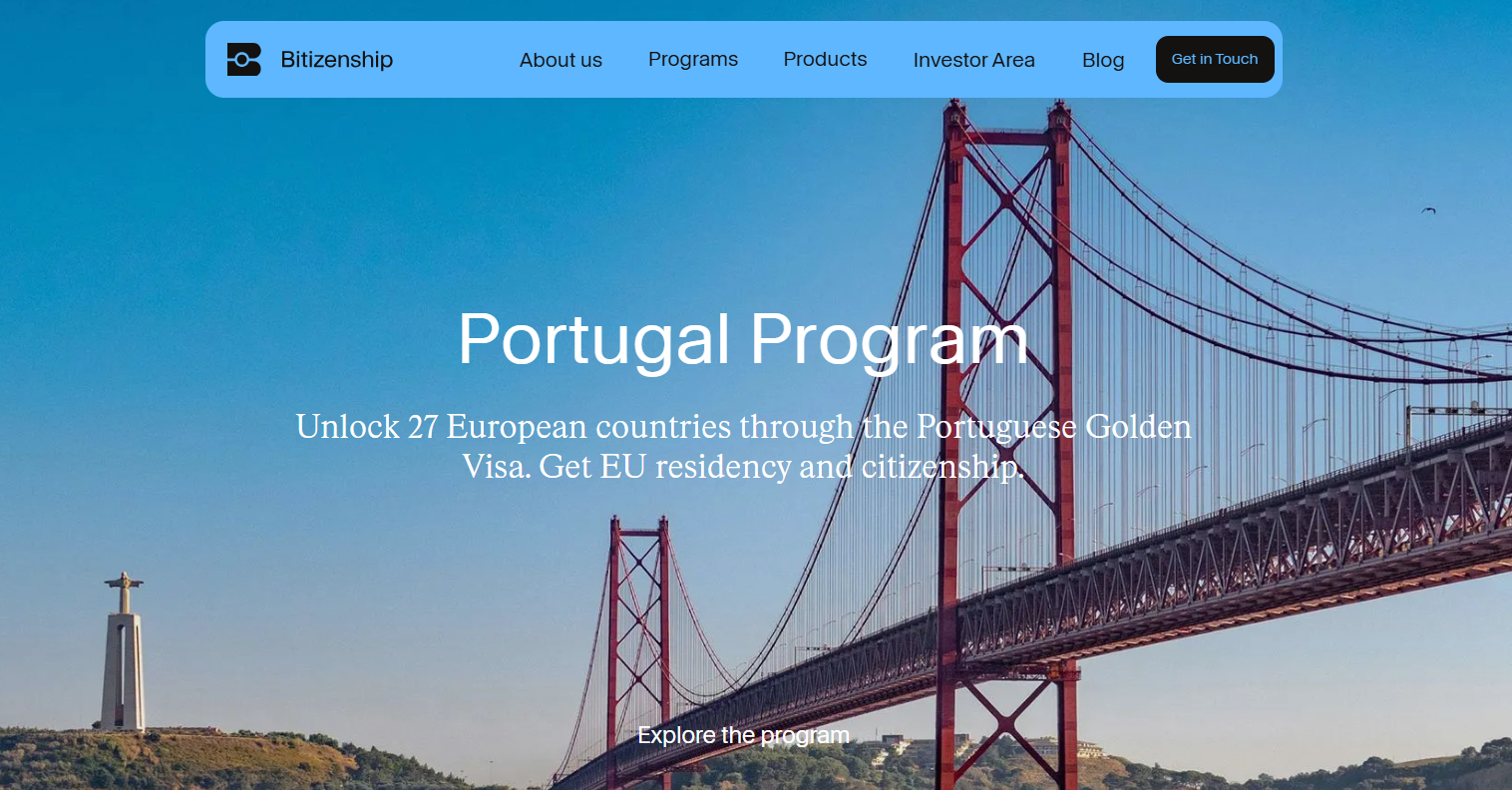
- Bitizenship's Portugal Fund is a Golden Visa-eligible private equity fund. The qualifying investment is €500,000, the fund invests in a fully owned Portuguese company focused on the Bitcoin ecosystem, and the stay requirement is 14 days every two years. Permanent residency eligibility comes at five years, with a subsequent pathway to citizenship subject to legal, language, and integration requirements.
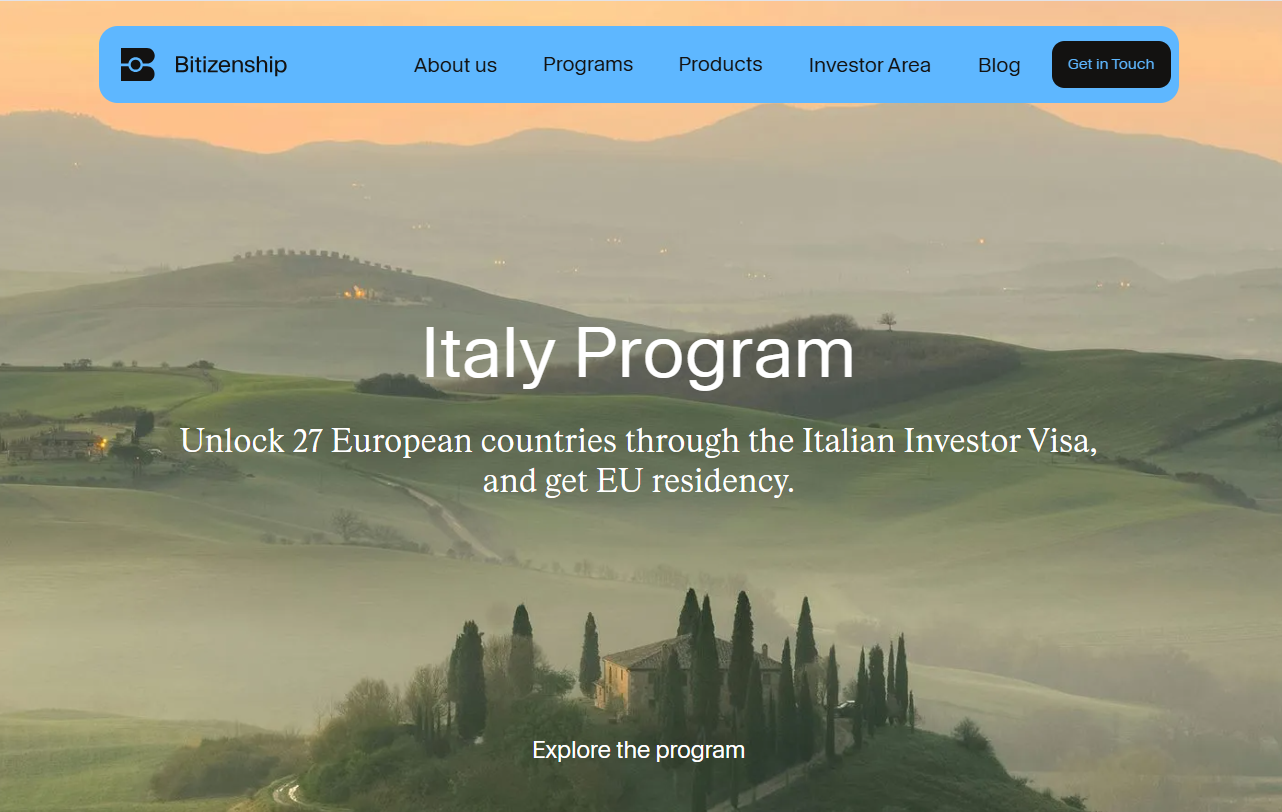
- The Bitcoin Dolce Visa is Italy's Investor Visa pathway, built around a €250,000 equity investment in Bitizenship Italia S.r.l., a Milan-based Innovative Startup. Visa approval comes before capital is transferred, processing typically runs three to six months, and there is no minimum stay requirement to maintain the visa itself.
The distinction that matters for a nomad reading this: Portugal is residency by investment through a fund with a light presence obligation, while Italy is pure residency by investment through a startup, where citizenship would require ten years of continuous legal residence at 183 or more days per year. Neither guarantees citizenship, returns are not guaranteed, and both carry investment risk.
"Most people save for a second home. The smartest ones save for a second passport. One gives you a better view. The other gives you and every generation after you options no amount of money can buy later." — Alessandro Palombo, Co-Founder, Bitizenship
Conclusion
The best digital nomad visas in 2026 reward people who read past the income threshold. Portugal, Spain, Italy, and to a degree Greece offer permits that accumulate toward permanent residency.
Estonia, Croatia, the UAE, Thailand, Costa Rica, and Malaysia offer excellent temporary bases that expire without trace.
The tax question sits underneath all of them, and 183 days is the line most people cross without deciding to.
For remote workers and founders who eventually want European residency without organising their entire year around it, investment routes solve a problem that no nomad visa is designed to solve, and Bitizenship structures two of them, a Portuguese fund and an Italian startup, for exactly that profile.
Get in touch to work out which pathway fits your timeline.
Read Next:
- The Prima Casa 18-Month Rule: How Foreign Buyers Cut Italian Registration Tax From 9% to 2%
- Portugal D7 Visa Requirements 2026
- Portugal Golden Visa vs D7 Visa: Which Residency Path Fits You in 2026?
FAQs:
1. Which digital nomad visas in 2026 actually lead to permanent residency?
Portugal's D8, Spain's digital nomad visa, and Italy's digital nomad visa are the main programs where time on the permit can count toward permanent residency, typically after five years of legal residence and subject to continuity and language requirements. Greece can also count, depending on how the permit is renewed and maintained. Estonia, Croatia, the UAE, Thailand, and Malaysia do not build toward settlement. Bitizenship works with clients who reach that ceiling and want a residency route that accrues from the start.
2. What income do I need for the best digital nomad visas in Europe?
European income thresholds in 2026 generally range from roughly €2,850 per month in Spain to €4,500 per month in Estonia, with Portugal at €3,680, Greece at €3,500 net, and Croatia at approximately €3,622.50. Italy is the outlier at around €28,000 per year, though it adds a highly qualified worker test. These figures are indexed to minimum or average wages and move most years, so always verify with the consulate before applying. Bitizenship advises clients whose income is asset-based rather than salaried, where these thresholds are difficult to evidence.
3. Do digital nomad visas make me a tax resident?
A digital nomad visa does not by itself create tax residency, but spending more than 183 days in most countries does, and centre-of-vital-interests tests can apply even below that. Croatia exempts foreign-source income during the permit and the UAE levies no personal income tax, while Spain's Beckham regime and Greece's 50% reduction require separate, deadline-bound applications. US citizens remain taxable on worldwide income regardless of where they live. Bitizenship always recommends engaging a qualified cross-border tax advisor before establishing residence anywhere.
4. Can a digital nomad visa lead to citizenship?
Very few digital nomad visas lead to citizenship, and those that do run on long timelines. Portugal's 2026 nationality reform set naturalisation at seven years for EU and CPLP nationals and ten years for others, with the clock starting from issuance of the first residence card. Italy requires ten years of continuous legal residence at 183 or more days per year, plus B1 Italian and integration criteria. Bitizenship frames both Portugal and Italy honestly as pathways to permanent residency first, with citizenship as a later eligibility subject to requirements and never guaranteed.
5. What is the alternative to a digital nomad visa for EU residency without relocating?
The main alternative is investment-based residency, where qualification comes from a qualifying investment rather than a monthly salary and presence obligations are lighter. Bitizenship structures two such pathways: a €500,000 Golden Visa-eligible private equity fund in Portugal, which requires 14 days of stay every two years, and a €250,000 equity investment in a Milan-based Innovative Startup under Italy's Investor Visa, which has no minimum stay requirement to maintain the visa. Both are subject to eligibility requirements, capital is at risk, and neither guarantees residency approval or citizenship.
Disclaimer:
This article is published by Bitizenship for informational and educational purposes only. It reflects Bitizenship's perspective on the investment migration market and is not intended as legal, tax, immigration, investment, or financial advice, nor as an offer or solicitation to subscribe to any investment product. Comparisons with other firms are based on publicly available information and our own assessment of structural differences in business models. We have aimed for accuracy, but descriptions of programs, regulations, and competitor offerings are necessarily summaries and may not capture every legal nuance. Program terms, eligibility criteria, processing times, tax regimes, and regulatory frameworks change frequently and vary by individual circumstances. The Bitcoin Dolce Visa involves an equity investment in Bitizenship Italia S.r.l., an Italian private company. Any investment decision should be made only after reviewing the official documentation and consulting independent legal, tax, and financial advisors qualified in the relevant jurisdictions. Past performance does not guarantee future results. Capital is at risk. Residency and citizenship outcomes depend on meeting all legal, language, residency, and integration requirements set by the relevant authorities and are never guaranteed. Always refer to official government and regulatory sources, and engage qualified professionals before acting on any information in this article.

Gain residency and citizenship for you and your family. Enjoy the freedom to live, work, do business.
