Moving to Portugal from the US in 2026: Visas, Taxes, Schools, and a Realistic Timeline

Moving to Portugal from the US in 2026 is a bigger decision than it was three years ago, and the paperwork is slower, not faster.
The appetite hasn't cooled: 40% of American women aged 15 to 44 said in 2025 they would move abroad permanently if they could, up from 10% in 2014 (Source: Gallup).
What has changed is the fine print. The D8 income floor rose in January, the Nationality Law doubled the citizenship clock in May, and AIMA is still working through a backlog that adds months to every route.
This guide is built for the American who's past the daydream stage and needs a decision. It walks through the visa decision tree, a month-by-month 2026 timeline, what happens to your taxes on both sides of the Atlantic, how schooling works for kids, and why some people shouldn't move at all yet.
It also covers the option most relocation guides skip: getting Portuguese residency without living there full-time, which is the path Bitizenship structures for Bitcoin-aligned investors.
Key Takeaways
- Pick your visa first: D8 for remote income, D7 for passive income, Golden Visa for investors.
- Budget 9 to 14 months from first document to residence card in 2026.
- Portugal taxes worldwide income after 183 days; US filing obligations never stop.
- Citizenship now takes 10 years of legal residence for Americans, counted from your first card.
- Moving to Portugal from the US part-time? Bitizenship's Portugal Fund route exists for that.
Step One: Pick the Right Visa Before You Pick a Neighborhood
Most Americans start by browsing apartments in Cascais. Start with the visa instead, because the visa dictates how much time you must spend in Portugal, what income you need to show, and how soon you can bring your family. Portugal's Golden Visa dropped real estate in October 2023, so property is no longer a route at all, which is covered in detail in this breakdown of the current real estate rules.
Here's the decision tree in one pass:
- You earn remotely from non-Portuguese clients or an employer: D8 (digital nomad / remote work visa).
- You live on pensions, dividends, rent, or royalties: D7 (passive income visa).
- You have €500,000 to invest and don't want to relocate full-time: Golden Visa via a qualifying fund.
- Your spouse qualifies for one of the above: family reunification rides on their permit.
- You're 18 to 30 and want to study first: D4 student visa, then convert.
Each branch has a different presence requirement, and that single variable determines whether this is a relocation or a Plan B.
The D8 remote worker route
The D8 is the workhorse for American tech, marketing, and consulting professionals. The income requirement is pegged at four times the Portuguese minimum wage, and the minimum wage rose to €920 in January 2026, so the D8 floor is now €3,680 per month for a single applicant.
Add roughly 50% of minimum wage (€460) for a spouse and 30% (€276) per child, plus savings of about €11,040 (twelve months of minimum wage) in a Portuguese account.
Two things catch Americans off guard:
- AIMA assesses income against the minimum wage in force at your appointment date, not your filing date. A 2027 wage hike can move the bar under you.
- The D8 is a full-residency permit. To renew, you can't be absent more than six consecutive months or eight months total across the two-year permit, so plan for roughly 16 of every 24 months in Portugal.
If your income is close to the line, wait a quarter and build a cleaner 12-month bank history before applying.
The D7 passive income route
The D7 requires passive income of at least the Portuguese minimum wage, €920 per month for the main applicant, from sources like Social Security, pensions, dividends, or rental property. Most consulates want to see a year of consistent deposits and a healthy savings cushion, because €920 doesn't cover Lisbon rent.
The D7 carries the same presence expectation as the D8. Retirees who plan to split time between Florida and the Algarve often discover this too late. If you want six months in each country, the D7 will be difficult to renew.
The Golden Visa investor route
Portugal's Golden Visa (ARI) is the only mainstream route that doesn't require you to live in Portugal. The qualifying investment for fund-based applications is €500,000, and under Portuguese rules the eligible investment is a fund, not a company you buy into directly.
The full list of qualifying routes after the real estate ban is covered in this guide to Portugal residency by investment.
The stay requirement is 14 days every two years. That's the whole reason the program exists for people who aren't moving. More on this below.
Families and students
Spouses, dependent children, and dependent parents can be included on D7, D8, and Golden Visa applications, either at filing or through family reunification after the main applicant's permit is issued. Students on a D4 get a residence permit tied to their course, and years spent studying count as legal residence for permanent residency purposes.
Who should not move yet
Not everyone reading this should book flights. The team at Bitizenship regularly talks people out of a full relocation when the numbers or the timing don't work.
You probably shouldn't move yet if:
- Your remote income sits within 10% of the €3,680 D8 threshold and could drop.
- You're relying on the old five-year citizenship timeline. It's gone. See the tax and citizenship sections below.
- You want to spend more than six months a year outside Portugal but haven't budgeted €500,000 for a Golden Visa.
- Your kids are two years from university and you haven't secured an international school place.
- Your US employer hasn't confirmed in writing that you can work from Portugal (many can't, for payroll and permanent-establishment reasons).
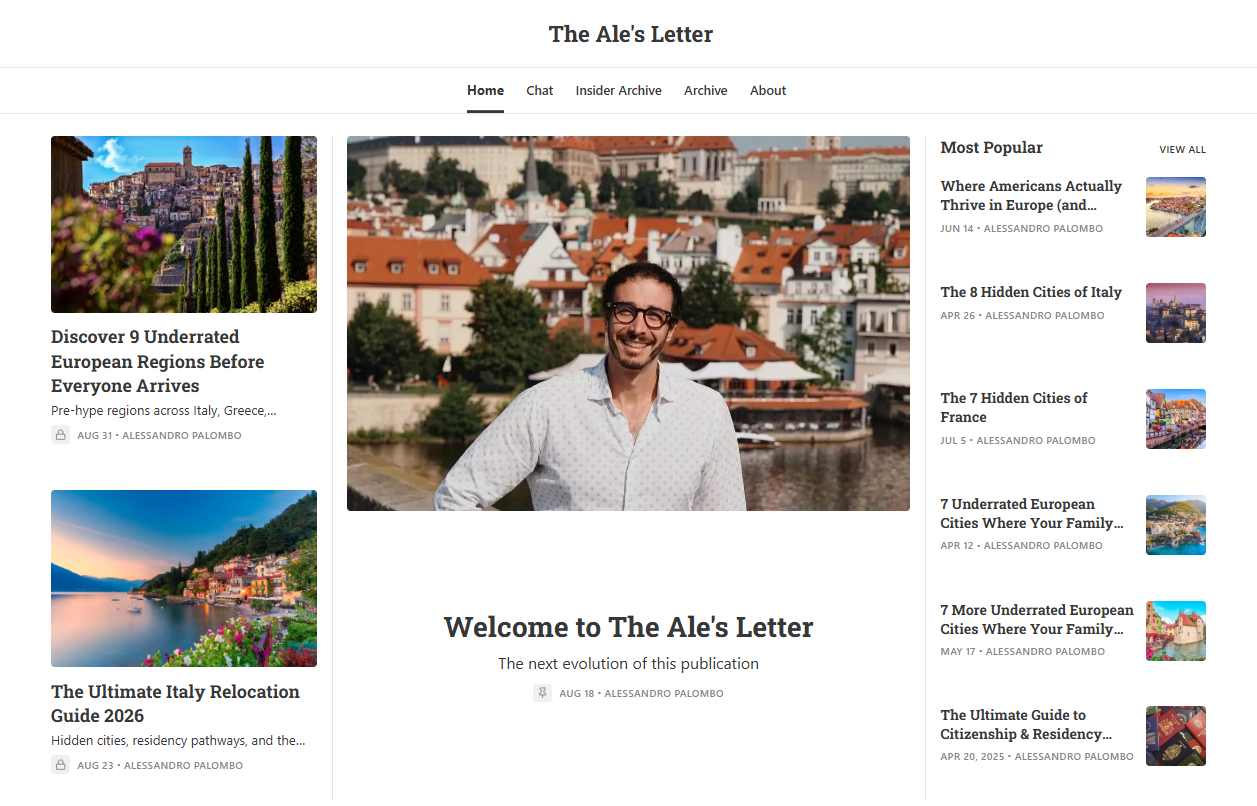
Alessandro Palombo, Bitizenship's co-founder, writes about exactly these trade-offs, when to move, when to wait, and when a residency card beats a relocation, in The Ale's Letter. It's worth reading before you sign a lease.
The 2026 Timeline: What Actually Happens, Month by Month
Every relocation guide gives you a checklist. Few tell you how long each item takes in 2026, and the honest answer is: longer than the official targets. Golden Visa applicants should read Bitizenship's Portugal FAQ for the investment-specific timeline; what follows is the D7/D8 path.
A realistic sequence for a D7 or D8 applicant looks like this:
- Months 0 to 2 - NIF, bank account, and accommodation: You need all three before the consulate will take your file.
- Months 2 to 5 - Consulate decision: The legal target is 60 days; in practice, 2026 decisions are running three to four months at busy US consulates.
- Month 5 - Visa issued: A four-month, two-entry visa. Enter Portugal and register.
- Months 5 to 12 - AIMA biometrics: Your appointment may be booked at visa issuance or you may wait months for a slot. Providers report six to nine months end-to-end for the residence card as of mid-2026.
- Months 9 to 14 - Residence card in hand: Two years validity, then a three-year renewal.
So from first document to physical card, plan for nine to fourteen months. Anyone quoting you four months is describing 2022.
Before you apply: NIF, bank account, and the rental problem
The NIF (Número de Identificação Fiscal) is your Portuguese tax number and the key that unlocks everything else. As a non-resident American, you'll need a fiscal representative in Portugal to obtain it, which a lawyer or NIF service can do remotely in a week or two for €100 to €300.
With the NIF, your passport, and proof of address, you can open a Portuguese bank account, and several banks now do this remotely or through a lawyer with power of attorney.
Then comes the part nobody warns you about: the consulate wants proof of accommodation, usually a 12-month lease or deed, before granting a visa. Landlords want a visa, a NIF, and local income before signing a lease. You're stuck in a loop.
Ways Americans break it:
- Sign a 12-month lease remotely through a relocation agent or lawyer, paying three to six months upfront.
- Use a mid-term furnished rental (three to twelve months) with a formal contract the consulate will accept.
- Buy property outright (it doesn't qualify for a Golden Visa, but it does satisfy the accommodation requirement).
Check your specific consulate's list. Washington, New York, San Francisco, Boston, and Newark don't all accept the same documents.
Consulate to AIMA: what the backlog actually looks like
AIMA replaced SEF in October 2023 and inherited more than 300,000 pending cases; that number climbed past 400,000 in 2025 before AIMA's Mission Structure began clearing it. For new D7 and D8 applicants, the practical effect is a longer wait between arriving in Portugal and receiving your residence card, during which you're legally present but administratively in limbo.
This limbo matters for three reasons:
- Your permanent residency clock and, under the 2026 Nationality Law, your citizenship clock both start from the date your first residence card is issued, not from arrival or application.
- Some employers, landlords, and banks want the physical card, not the visa.
- Travel outside Schengen while waiting is possible on the visa, but re-entry can be scrutinized.
Keep every receipt and appointment confirmation. If AIMA misses its statutory deadlines, Portuguese courts have been compelling appointments, and lawyers file these injunctions routinely.
After arrival: NISS, SNS number, and school enrollment
Once you're in Portugal with a visa, three registrations follow. The NISS (social security number) is required if you work, freelance, or run a business locally; D8 freelancers register as self-employed and start contributing after a first-year exemption.
The SNS user number (número de utente) comes from your local health center once you have proof of residence, and it gives your family access to public healthcare. School enrollment for public schools happens through your local school cluster (agrupamento) with proof of address and your child's vaccination record, and it can be done before your card arrives.
None of this is hard. All of it takes multiple in-person visits, in Portuguese, during limited hours. Budget a full week.
Taxes: What Changes the Day You Become Resident
Here's the problem most Americans discover a year late: Portugal taxes residents on worldwide income, and the United States taxes citizens on worldwide income regardless of where they live. Both are true at once.
Bitizenship has a dedicated breakdown of what a residence permit does and doesn't change for US tax obligations abroad; the essentials are below.
The three questions to answer before you move:
- When, exactly, do I become a Portuguese tax resident?
- Do I qualify for IFICI, or am I on the standard IRS scale?
- What does my US filing look like with foreign accounts and foreign income?
Get all three answered by a cross-border advisor before your arrival date, because arrival date is a tax decision.
Becoming Portuguese tax resident
You become tax resident in Portugal if you spend more than 183 days there in any 12-month period, or if on any day you hold a home with the intention of using it as your habitual abode. That second test bites Americans who sign a lease in September, arrive in December, and assume they're safe until next year. Portugal applies partial-year residency, so your tax residence can start on the day you arrive with a home ready.
Golden Visa holders spending 14 days every two years don't trip either test. D7 and D8 holders almost always do.
IFICI vs standard IRS
The old NHR regime closed to new applicants at the end of 2023. Its replacement, IFICI (sometimes called NHR 2.0), is narrower: a 20% flat rate on qualifying Portuguese-source employment or self-employment income, plus an exemption on most foreign-source income (not pensions), for 10 years.
To qualify you need to be a new tax resident who wasn't resident in the prior five years and be working in an eligible high-value activity, typically with a degree at EQF level 6 or above. First-wave approvals landed in March 2026, so the regime is operational.
If you don't qualify, you're on the standard IRS (Imposto sobre o Rendimento das Pessoas Singulares) scale:
- Progressive brackets topping out at 48%, plus a solidarity surcharge of 2.5% to 5% on income above €80,000 and €250,000.
- Foreign dividends and interest taxed at 28% (or aggregated, if lower).
- Crypto gains on assets held over 365 days are exempt from IRS under current rules; shorter holds face 28%. Confirm treatment for your specific assets before selling anything.
Where Bitizenship lands: IFICI is excellent if you're a working professional in tech or research. It does nothing for retirees living on pensions, and a US retiree on the standard scale can face a materially higher effective rate in Portugal than at home. Run the numbers on your actual income mix, not on the headline 20%.
US taxes don't stop: FATCA, FBAR, and the treaty
Every US citizen keeps filing Form 1040 from Portugal. Add to that:
- FBAR (FinCEN 114) if your foreign accounts exceed $10,000 in aggregate at any point in the year.
- Form 8938 (FATCA) for specified foreign financial assets above the expat thresholds.
- Form 2555 (FEIE) to exclude around $130,000 of earned income (indexed annually), or Form 1116 for foreign tax credits, whichever nets better.
- Form 8621 if you hold non-US mutual funds or ETFs, which the IRS treats punitively as PFICs.
The 1994 US-Portugal tax treaty prevents most double taxation through credits, but its saving clause means the US retains the right to tax you as if the treaty didn't exist for most income types. The totalization agreement between the two countries handles social security so you don't pay into both systems.
Golden Visa investors should also read how the Golden Visa tax benefits differ when you're not a tax resident.
Family: Spouses, Kids, and the School Decision
Portugal treats families generously in the visa process and inconsistently in the school process. Spouses and dependent children are added to your D7, D8, or Golden Visa application, and once the main applicant holds a permit, family reunification is a right rather than a discretionary grant.
For a wider comparison of how Portugal stacks up for families against other destinations, see Bitizenship's ranking of the best countries for expats.
The school question is the one that reorganizes household budgets:
- Public school: free, Portuguese-language, decent quality, enrollment via local agrupamento with proof of address. Younger children (under 10) typically adapt within a year.
- Portuguese private or bilingual schools: €6,000 to €12,000 per year, often with English-language tracks.
- International schools (IB, British, American curricula): €12,000 to €26,000 per child per year in the Lisbon-Cascais belt, with total costs running 15% to 25% above headline tuition once you add enrolment fees, capital levies, transport, and lunches.
A family with two children at a mid-tier international school should budget €42,000 to €62,000 for the first year alone. That figure changes the visa math for many D8 households.
Public vs international: how to decide
The rule of thumb Bitizenship's partner network uses: under 10, go public and let them learn Portuguese; secondary age, especially within three years of university applications, go international so the curriculum and transcripts translate.
Most international schools in Cascais, Oeiras, and Carcavelos run at or near capacity, and waitlists of 12 months for popular year groups are normal. Apply the moment you decide to move, not when your visa arrives.
One more practical point: children on a D7 or D8 family permit accrue their own legal residence time. A 12-year-old who arrives in 2027 could meet the permanent residency threshold at 17, subject to the same A2 Portuguese requirement as adults.
The Golden Visa: The "I Am Not Relocating Full-Time" Option
Everything above assumes you're actually moving. Plenty of Americans don't want to. They want a European residence card, Schengen access, a safe place for the family, and the ability to decide later, without giving up their US home, job, or tax position. That's the Golden Visa, and it's the route Bitizenship's Portugal program is built around.
The structure, in brief:
- Qualifying investment of €500,000 into a Golden Visa-eligible fund (funds are the eligible vehicle under Portuguese rules; direct company shares and real estate are not).
- Stay requirement of 14 days every two years, versus roughly 16 of every 24 months on the D7/D8.
- Pathway to permanent residency after 5 years of holding a residence permit, with the Investor PR variant waiving the minimum-stay obligation.
- After PR, a consequential pathway to citizenship, subject to Portugal's Nationality Law requirements.
- Investment must arrive via bank transfer from a foreign account; it cannot be made in Bitcoin.
"Most people save for a second home. The smartest ones save for a second passport. One gives you a better view. The other gives you and every generation after you options no amount of money can buy later."
That's how Alessandro Palombo, Bitizenship's co-founder, frames the decision, and it's the cleanest summary of who the Golden Visa is for.
Presence: 14 days versus 183 days
This is the fault line between the two philosophies. A D8 holder is a Portuguese tax resident, spends most of the year in Portugal, and is building a life there. A Golden Visa holder can keep US tax residency, keep the house in Austin, and fly in for two weeks every other year to renew. Neither is better; they answer different questions.
What the Golden Visa doesn't do:
- It doesn't give you a faster passport. Since Organic Law 1/2026 entered into force on May 19, 2026, naturalization requires 10 years of legal residence for non-EU, non-CPLP nationals, counted from your first residence card. That's true for Golden Visa and D8 holders alike.
- It doesn't remove investment risk. Fund investments can lose value, including the full principal, and management fees apply regardless of performance.
- It doesn't skip the AIMA queue. Golden Visa biometrics are currently running 11 to 15 months from application, with the first card another 6 to 12 months after that.
Bitizenship's own planning memo puts the realistic path from application to PR eligibility at roughly 6.5 to 7.5 years, not a clean five. Anyone selling you "five years to citizenship" is working from a law that no longer exists.
Where Bitizenship fits
Bitizenship structures a Golden Visa-eligible private equity fund, Bitizenship's Portugal Fund, that invests in a fully owned Portuguese research and investment company focused on the Bitcoin ecosystem. Investors gain exposure to Bitcoin ecosystem activity through the company's operations, not through a direct Bitcoin purchase on their behalf.
The fund is closed-ended until 2032, capped at €30M, authorized by the Portuguese securities regulator (CMVM No. 2089), and managed by 3 Comma Capital S.C.R. with Bison Bank as depository and BDO as auditor. Annual profit distributions are possible at year-end, subject to an assembly vote and company performance; returns aren't guaranteed.
The fit is specific:
- Americans who hold Bitcoin and want their residency investment aligned with that thesis rather than parked in a generic real estate or bond fund.
- Families who want Schengen mobility and a PR pathway without leaving the US tax system yet.
- Investors who value the 14-day stay requirement over the speed of a D8.
The team at Bitizenship has managed 150+ visas and works with 25+ professionals across its legal and tax partner network, with founder-led oversight on the legal side. If your plan is a relocation, the D7 or D8 is cheaper and faster. If your plan is optionality, the Bitcoin Ecosystem Golden Visa is worth a conversation.
Conclusion
Moving to Portugal from the US in 2026 is still very doable; it's just slower, more expensive on the school side, and less generous on citizenship than the 2022 blogs promised.
- The D8 works for remote earners above €3,680 a month who are ready to live in Portugal 16 months out of every 24.
- The D7 works for retirees with reliable passive income and the same presence commitment.
Both make you a Portuguese tax resident, both keep you a US taxpayer, and both put you in an AIMA queue that adds months to every step.
The Golden Visa answers a different question: how do I hold European residency, a five-year path to permanent residency, and a consequential path to citizenship while keeping my life in the US intact?
For Bitcoin-aligned investors, Bitizenship's Portugal Fund is the vehicle built for exactly that. Whichever branch you take, decide it before the apartment hunt, get a cross-border tax advisor before your arrival date, and get on a school waitlist the day you commit.
Get in touch if the part-time route fits your situation.
Read Next:
- Best Countries to Retire Abroad in 2026: Visas, Healthcare, Tax, and Real Cost
- Dual Citizenship in 2026: Which Countries Allow It, and How Americans Actually Get a Second Nationality
- How to Get EU Citizenship in 2026: Descent, Residency, and Investment (Realistic Timelines)
FAQs:
1. What is the easiest visa for moving to Portugal from the US in 2026?
The D8 remote work visa is the most common route for working Americans, requiring €3,680 per month in foreign-sourced income as of 2026. Retirees typically use the D7 passive income visa at €920 per month. Both require living in Portugal most of the year. Bitizenship works with Americans who want the alternative: a Golden Visa route with a 14-day stay requirement every two years, structured through Bitizenship's Portugal Fund.
2. How long does moving to Portugal from the US take in 2026?
Plan for nine to fourteen months from your first document to a residence card on a D7 or D8, driven by consulate processing and AIMA's biometrics backlog. Golden Visa applications currently run 11 to 15 months to biometrics and 17 to 27 months to a first card. Bitizenship's guidance is to treat these as planning figures, not promises, and to start the NIF, bank account, and school applications before the visa is filed.
3. Will I pay taxes in both countries after moving to Portugal from the US?
You'll file in both, but treaty credits usually prevent paying twice on the same income. Portugal taxes worldwide income once you're resident (183 days or habitual abode), and the US taxes citizens everywhere, so FBAR, FATCA, and Form 1040 obligations continue. IFICI offers a 20% flat rate for qualifying professionals but excludes pensions. Bitizenship connects clients with cross-border tax partners because arrival date, visa type, and income mix all change the outcome.
4. Can my kids attend school after moving to Portugal from the US?
Yes, and enrollment doesn't wait for your residence card. Public schools are free and Portuguese-language, enrolled through the local agrupamento with proof of address. International schools in the Lisbon-Cascais area cost €12,000 to €26,000 per child annually and often have year-long waitlists. Bitizenship advises families to apply to international schools as soon as they commit to the move, since capacity, not admission standards, is the binding constraint.
5. Is moving to Portugal from the US still a path to citizenship?
It's a pathway, but a longer one. Since May 19, 2026, naturalization requires 10 years of legal residence for Americans, counted from the first residence card, plus A2 Portuguese, a civic knowledge test, and a clean record. Permanent residency remains available after 5 years. Bitizenship frames Portugal as a five-year path to PR with a consequential path to citizenship, and it structures its Golden Visa route so investors can hold that pathway without relocating full-time.
Disclaimer:
This article is published by Bitizenship for informational and educational purposes only. It reflects Bitizenship's perspective on the investment migration market and is not intended as legal, tax, immigration, investment, or financial advice, nor as an offer or solicitation to subscribe to any investment product. Comparisons with other firms are based on publicly available information and our own assessment of structural differences in business models. We have aimed for accuracy, but descriptions of programs, regulations, and competitor offerings are necessarily summaries and may not capture every legal nuance. Program terms, eligibility criteria, processing times, tax regimes, and regulatory frameworks change frequently and vary by individual circumstances. The Bitcoin Dolce Visa involves an equity investment in Bitizenship Italia S.r.l., an Italian private company. Any investment decision should be made only after reviewing the official documentation and consulting independent legal, tax, and financial advisors qualified in the relevant jurisdictions. Past performance does not guarantee future results. Capital is at risk. Residency and citizenship outcomes depend on meeting all legal, language, residency, and integration requirements set by the relevant authorities and are never guaranteed. Always refer to official government and regulatory sources, and engage qualified professionals before acting on any information in this article.

Gain residency and citizenship for you and your family. Enjoy the freedom to live, work, do business.
