Citizenship by Investment in 2026: Every Active Program, Real Cost, and What You Actually Get
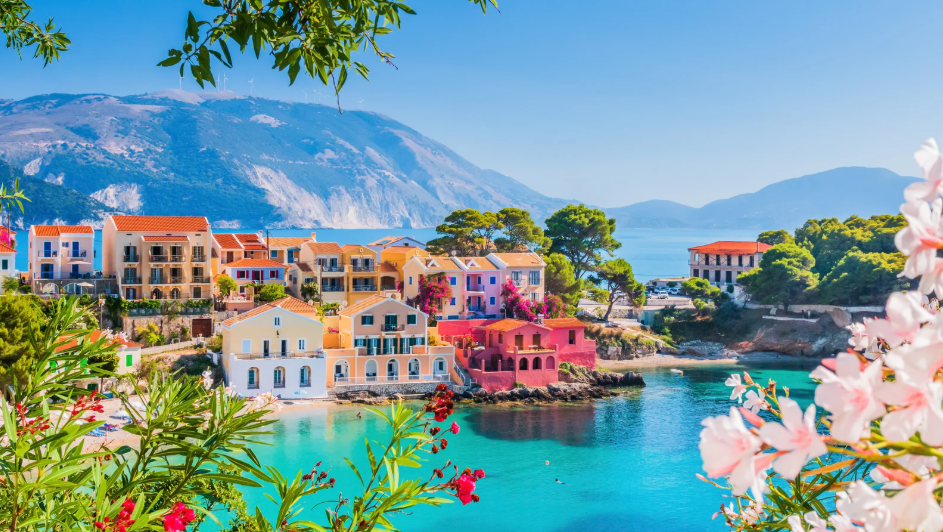
Citizenship by investment is having its hardest year since the industry began.
In July 2026, the European Union gave five Eastern Caribbean nations two years to phase out their citizenship by investment programs or lose visa-free access to the 29-country Schengen area (Source: The Washington Post).
Prices have risen, due diligence has tightened, and three Western governments have pulled visa-free access from CBI-issuing states in the last twelve months. At the same time, the programs still work: a clean file can still produce a second passport in under six months.
This guide covers every active program as of August 2026, what each one really costs once fees and family are counted, and where the honest tradeoffs sit.
Bitizenship does not sell Caribbean passports, which is exactly why this comparison is worth reading.
Key Takeaways
- Eleven citizenship by investment programs are active in 2026, from $90,000 to $1,000,000.
- The EU has asked five Caribbean states to end their programs by June 2028.
- CBI buys a travel document and speed, not the right to live in Europe.
- Bitizenship runs residency by investment routes, not citizenship by investment programs.
- Budget 15% to 30% above the headline donation once fees are counted.
What Citizenship By Investment Actually Buys You In 2026
Citizenship by investment grants full nationality and a passport in exchange for a qualifying contribution or investment, usually without any requirement to live in the country. That is the entire proposition, and it is narrower than most marketing suggests.
What you get:
- A second nationality that passes to your children
- A travel document with its own visa-free network
- A jurisdiction that is not your birth country, useful if capital controls or political conditions shift
- Speed, measured in weeks or months rather than years
What you do not get:
- The right to live, work, or study in the EU
- Tax residency anywhere by default
- Immunity from the visa policies of countries that dislike CBI
- A guarantee that the passport's travel access will look the same in five years
That last point is the one that changed in 2026. If you are weighing the different routes to a second passport, treat travel access as a variable, not a fixed asset.
Every Active Citizenship By Investment Program In 2026
Eleven programs are currently accepting applications across four regions. Here is each one, what it costs, how long it takes, and what the passport is actually worth.
1. The Five Caribbean Programs: St Kitts, Dominica, Antigua, Grenada, And St Lucia
All five Eastern Caribbean programs now operate under a common price floor of USD 200,000, set by the OECS Memorandum of Agreement effective 1 July 2024, and a shared regulator, the Eastern Caribbean Citizenship by Investment Regulatory Authority (ECCIRA), enacted into national law in 2025 and expected to become operational during 2026.
All five retain Schengen and UK visa-free access as of August 2026, and their passports cluster within roughly ten to fifteen destinations of each other.
St Kitts And Nevis: The Oldest Program, At USD 250,000
Launched in 1984, St Kitts sits at the premium end. The Sustainable Island State Contribution is USD 250,000 and covers a main applicant or a family of up to four, with no separate government processing fee layered on top.
Real estate starts at USD 325,000. Due diligence runs USD 10,000 for the main applicant and USD 7,500 per dependant aged 16 or over, with under-16s exempt. Mandatory biometric collection went live on 14 April 2026. Processing typically runs five to eight months.
Dominica: The Cheapest Headline Number, At USD 200,000
Dominica's Economic Diversification Fund prices exactly at the regional floor: USD 200,000 for a single applicant, rising to USD 250,000 for a family of four, with USD 25,000 per additional minor. Real estate starts at USD 200,000 with a three-year hold, the shortest in the region.
Dominica introduced formal interviews for applicants aged 16 and over. Processing runs roughly three to six months.
Antigua And Barbuda: Best Family Math, At USD 230,000
The National Development Fund contribution is USD 230,000 for a main applicant plus up to three dependants, a single flat price for a family of four. The University of the West Indies Fund route sits at USD 260,000 for families of six or more and includes a year of tuition for one family member.
Antigua is the only Caribbean program with a physical presence rule already in force: five days in the country during the first five years.
Grenada: The Only E-2 Treaty Passport, At USD 235,000
Grenada's National Transformation Fund contribution is USD 235,000, covering a family of up to four. Its distinguishing feature is a bilateral E-2 investor treaty with the United States, which no other Caribbean CBI country holds. That treaty is the main reason Grenada commands a premium over Dominica.
St Lucia: Multiple Routes, At USD 240,000
The National Economic Fund contribution is USD 240,000 for an applicant plus up to three qualifying dependents, with government bond and enterprise routes also available. Processing generally runs four to eight months.
If you are ranking these five by travel utility, our breakdown of passport strength in 2026 is a better reference than any single program's marketing page.
2. Turkey: The USD 400,000 Real Estate Route
Turkey's program, active since 2017 under Article 12(b) of Law No. 5901, requires USD 400,000 in real estate held for three years, or USD 500,000 in a bank deposit, government bonds, or fund units. Job creation for 50 Turkish citizens also qualifies.
Key facts:
- Investment is recoverable after the three-year hold, unlike a Caribbean donation
- Spouse and children under 18 are included with no additional investment
- No language test, no minimum stay, but you must visit Turkey during the process
- Processing runs roughly six to twelve months
- Same-day biometrics became available in Istanbul from 9 February 2026
The catch is mobility. A Turkish passport covers roughly 110 to 120 destinations and does not include the Schengen area, the UK, the US, or Canada. Turkey is a genuine option if you want a recoverable investment and regional access.
It is a poor option if the goal is Europe, in which case Italy's Investor Visa is a structurally different answer to a different question.
3. Egypt: A USD 250,000 Contribution With A Weak Travel Document
Egypt's program, established under Legislation No. 190 of 2019 and refined by Prime Ministerial Decree No. 876 of 2023, offers four routes: a USD 250,000 non-refundable contribution to the public treasury, USD 300,000 in approved real estate held for five years, a USD 500,000 bank deposit, or a USD 350,000 business investment paired with a USD 100,000 contribution.
Processing takes roughly six to nine months. There is no Arabic test, no history exam, and no residency requirement. The Egyptian passport carries visa-free or visa-on-arrival access to somewhere between 50 and 60 destinations, with no Schengen access. This is a jurisdictional hedge and a regional business tool, not a mobility upgrade for most readers.
4. Jordan: Active Investment Only After The 2025 Reform
Jordan's Investor Citizenship Program, launched in 2018, was substantially restructured by a Cabinet decision in July 2025 that phased out the passive treasury-bond and bank-deposit routes in favour of routes requiring active business investment, share purchase, or job creation.
Current shape of the program:
- SME and project investment from roughly JOD 500,000 (about USD 705,000) outside Amman, rising to JOD 700,000 (about USD 985,000) in the Capital Governorate
- Listed securities and equity routes from JOD 1,000,000 upward (about USD 1.4 million)
- An employment route requiring 100 to 150 Jordanian employees registered with Social Security, maintained for two consecutive years after citizenship
- A cap of approximately 500 investor citizenship approvals per year
- No residency requirement, and E-2 treaty eligibility with the United States
Jordan is now the most operationally demanding program on this list. The passport covers roughly 50 destinations. Investors choose it for business reasons or E-2 access, rarely for mobility, and almost never as an alternative to Portugal's Golden Visa route.
5. Vanuatu: Fastest And Cheapest, With The Biggest Travel Penalty
Vanuatu's Development Support Program starts at USD 130,000 for a single applicant and around USD 180,000 for a family of four, with roughly USD 25,000 per additional dependant. Processing runs one to two months, the fastest in the world, with no residency, interview, or visitation requirement.
The problem is that the EU fully suspended Vanuatu's visa waiver on 4 February 2023 and formally moved the country to the visa-required list via Regulation (EU) 2025/11, adopted 12 December 2024. The UK revoked visa-free travel on 19 July 2023, citing abuse of the scheme. The passport now covers roughly 88 destinations, with none of them in Schengen.
Vanuatu is a case study in what happens when a CBI program loses institutional trust. Anyone weighing it against a European route should read the Portugal Golden Visa FAQs first, because the two are not substitutes.
6. Nauru: The Newest Program And The Most Fragile
Nauru launched its Economic and Climate Resilience Citizenship Program at COP29 in November 2024. The standard contribution to the Nauru Treasury Fund is USD 115,000, temporarily reduced to USD 90,000 under the 2026 Iruwa Initiative discount window. Processing runs three to four months, fully remote, with unusually broad dependant eligibility: spouse, children, parents, grandparents, and siblings, with age restrictions removed.
The response from Western governments was immediate. The UK imposed a visit visa requirement on Nauru nationals at 15:00 GMT on 9 December 2025, stating explicitly that it was acting "in response to the country's decision to introduce a new citizenship by investment programme." Ireland had already imposed a visa requirement during its 2025 round.
Nauru holds no visa-free access to the Schengen area, the UK, the US, or Canada.
At USD 90,000 this is the cheapest passport on the market. It is also the clearest demonstration that price and utility are different variables, a point worth holding in mind when comparing any of these against digital nomad visas.
7. El Salvador: The Only Program That Accepts Bitcoin Directly
El Salvador's Freedom Passport program, part of the "Adopting El Salvador" initiative, is the only citizenship by investment program in the world where the qualifying contribution is paid in cryptocurrency: USD 1,000,000 in BTC or USDT to a designated government wallet, non-refundable, capped at 1,000 applicants per year.
Processing runs roughly six to eight weeks, fully remote, with a 30 to 45 day due diligence phase. Spouse and minor children are included in the base contribution. The Salvadoran passport covers approximately 130 destinations including the full Schengen area, the UK, Japan, and Singapore. El Salvador holds an E-2 treaty with the United States and applies no capital gains tax on crypto gains.
For Bitcoin holders this is the only route where the asset itself moves on-chain into the qualifying payment. It is also USD 1 million non-refundable, which is four times the entry point of the Bitcoin Dolce Visa and buys a passport rather than an EU residence permit. Different product, different price, different outcome.
8. Malta: What Is Left After The European Court Ruling
There is no citizenship by investment program in the European Union in 2026.
On 29 April 2025, the Court of Justice of the European Union ruled in Case C-181/23 (Commission v Malta) that granting nationality in exchange for predetermined payments, absent a genuine link to the country, breaches Article 20 TFEU and the principle of sincere cooperation under Article 4(3) TEU.
Malta discontinued the Exceptional Investor Naturalisation framework on 23 July 2025, and Act XXI of 2025 entered into force the following day.
What remains is Citizenship by Merit under Subsidiary Legislation 188.06, revised by Legal Notice 159 of 2025. It is discretionary, case-by-case, assessed by an independent Evaluation Board, and carries no published investment threshold. Malta's own authorities have stated it is not a programme and should not be marketed as one.
If a website quotes a "Malta citizenship from €600,000" figure in 2026, it is selling something that no longer exists. Cyprus closed in 2020 and Bulgaria in 2022, which means the only structured European route now runs through residency, such as the Bitcoin Ecosystem Golden Visa fund pathway in Portugal.
9. Programs That Closed, Paused, Or Have Not Launched Yet
Flagging what is not available matters as much as listing what is.
- Cyprus: closed 2020 after a corruption scandal
- Bulgaria: closed 2022
- Montenegro: closed at the end of 2022, not reopened
- Malta MEIN: closed 2025 by court ruling
- Ireland's IIP: closed 2023, and it was residency rather than citizenship
- Spain's Golden Visa: abolished April 2025, also a residency program
Newer entrants include Sierra Leone (2024) and São Tomé and Príncipe (2025, from around USD 90,000). St Vincent and the Grenadines has confirmed plans to launch during 2026, and Argentina and Botswana have been reported as preparing frameworks. None of these has an established track record, and each carries the same visa-suspension exposure that hit Vanuatu and Nauru.
Two categories get confused constantly. Spain, Ireland, Greece, Hungary, Portugal, and Italy run residency programs. None of them sells citizenship.
Bitizenship’s comparison of the Golden Visa vs D7 routes shows how differently residency products are structured from CBI.
What Citizenship By Investment Really Costs Once Fees Are Added
The headline donation is never the number you pay. Here is the honest comparison as of August 2026.
On top of the qualifying investment, budget for:
- Due diligence: USD 7,500 to USD 10,000 for the main applicant, USD 4,000 to USD 7,500 per dependant aged 16 and over, usually zero for under-16s
- Government processing fees: roughly USD 1,000 per applicant, though some real estate routes carry USD 75,000 to USD 100,000 layers
- Passport, certificate, and bank check fees: typically USD 2,000 to USD 3,000 for a family
- Agent and legal fees: USD 15,000 to USD 50,000 depending on jurisdiction and complexity
A worked example: a St Kitts family of four pays USD 250,000 in contribution, USD 17,500 in due diligence, USD 1,000 in application fees, USD 1,444 in passport fees, and USD 400 in bank checks, landing core government costs around USD 270,500. With professional fees, the realistic all-in is USD 285,000 to USD 305,000.
Where our team lands: across the Caribbean, plan on 15% to 30% above the headline donation for a family of four. Anyone quoting you the donation as the total price is either inexperienced or not telling you everything, and the same discipline applies when you model Portugal Golden Visa tax benefits against a CBI donation.
EU Vs Caribbean Vs Turkey: What You Are Actually Buying
This is the distinction that decides everything, and it gets blurred constantly by people selling one category while implying the benefits of the other.
- A Caribbean, Pacific, or Turkish passport buys you a travel document and a jurisdiction. It does not give you the right to live, work, study, or access healthcare in Europe.
- A St Kitts passport lets you visit Schengen for 90 days in any 180-day period as a tourist.
That is the ceiling. There is no path from a Caribbean passport to European residency.
- An EU residence permit buys you the right to actually be there. Live, work, enrol children in school, access public healthcare, and after enough years, apply for naturalisation. It takes longer and it requires meeting real criteria.
There is no product that gives you both quickly. Since April 2025 there has been no lawful way to purchase EU citizenship, and the CJEU's reasoning in Case C-181/23 applies to every member state, not just Malta.
The two categories also carry different risk profiles:
- CBI travel access depends on the continued goodwill of other governments, which is currently deteriorating
- EU residency rights derive from a permit you hold directly, which does not evaporate because Brussels changes its view of a third country's program
- CBI is fast and finished; EU residency is slower and ongoing
That structural difference is the whole argument for Bitizenship's Portugal Fund as a category, not just as a product.
Source Of Funds And Due Diligence In 2026
Due diligence has tightened everywhere, and 2026 is the year the reforms landed at once.
What changed:
- Biometrics: St Kitts activated mandatory fingerprint and facial recognition collection on 14 April 2026
- Interviews: Dominica introduced formal interviews for applicants aged 16 and over
- Physical presence: ECCIRA member states agreed a 30-day physical presence requirement, formally delayed to mid-2026 and still pending implementation as of August 2026
- Regional oversight: ECCIRA will audit and enforce common standards across all five Caribbean programs once operational
- Third-country pressure: The US State Department's visa bond pilot requires nationals of Antigua and Barbuda, Dominica, and Grenada who are otherwise eligible for a B-1/B-2 visa to post bonds of USD 5,000, USD 10,000, or USD 15,000, set at the visa interview (list last updated 13 May 2026)
For Bitcoin holders, the source-of-funds file is where applications actually stall. Every program now expects a documented chain from original fiat acquisition to the funds being invested. That means complete exchange transaction histories as CSV exports rather than screenshots, blockchain-verified records of self-custody transfers, a professional chain analysis report where early acquisition records are incomplete, and evidence that gains were reported and taxed in your current jurisdiction.
Unreported crypto holdings are a red flag that sinks files.
The Honest Fork: A Passport In Six Months, Or A European Life
Here is the question that resolves most of this, and it only has two branches.
Choose citizenship by investment if:
- You need a second travel document quickly, measured in months
- Your current passport is the binding constraint on business or travel
- You want a jurisdictional hedge that does not require you to move
- You accept that travel access is a policy variable, not a permanent asset
- You are not trying to live in Europe
Choose European residency by investment if:
- You want the actual right to live, work, and raise a family in the EU
- You are planning over five to ten years rather than five to ten months
- You want access to European healthcare and education systems
- You are willing to meet real language, residency, and integration criteria
- You understand that citizenship, if it comes, comes at the end and is never guaranteed
"Most people save for a second home. The smartest ones save for a second passport. One gives you a better view. The other gives you and every generation after you options no amount of money can buy later." — Alessandro Palombo, Co-Founder, Bitizenship
You can learn more about how he thinks through this tradeoff in Ale's letter, where he covers it weekly as the programs change.
The mistake we see most often is people buying the fast product while expecting the slow product's benefits. If you want Europe, no Caribbean passport gets you there. If you want speed, no European residency program will deliver it in six months. Naming which one you actually want is the highest-leverage decision in this entire process
How Bitizenship Fits Into The Citizenship By Investment Landscape
To be direct: Bitizenship does not sell St Kitts, Dominica, Vanuatu, or any other citizenship by investment program. Bitizenship structures residency by investment vehicles in two European jurisdictions, which is a different category.
The two pathways:
1. Portugal
Bitizenship's Portugal Fund is a Golden Visa-eligible private equity fund requiring a €500,000 qualifying investment. The fund invests in a fully owned Portuguese company focused on the Bitcoin ecosystem.
The stay requirement is 14 days every two years, and the route leads to permanent residency eligibility after five years, with a consequential path to citizenship after that, subject to legal, language, and residency requirements.
2. Italy
The Bitcoin Dolce Visa is an Italian Investor Visa pathway built around a €250,000 equity investment in Bitizenship Italia S.r.l., a Milan-based Innovative Startup whose treasury is held in BTC as working capital and deployed for non-custodial Bitcoin Layer-2 validation and related R&D. Visa approval comes before capital transfer, processing typically runs three to six months, and there is no minimum stay requirement to maintain the visa.
Two clarifications that matter for accuracy:
- Portugal's eligible route is a fund, and Italy's is a startup.
- Italy is pure residency by investment: Italian citizenship requires ten years of continuous legal residence at 183 or more days per year, plus B1 Italian and integration criteria.
Anyone describing Italy as a citizenship by investment program has the category wrong.
Portugal's Nationality Law was revised in 2026, moving the naturalisation timeline to ten years for most non-EU nationals (seven for EU and CPLP nationals) and starting the clock at issuance of the first residence card rather than at application. Treat Portugal as a five-year permanent residency route with a consequential citizenship pathway, not a five-year passport.
Conclusion
Citizenship by investment in 2026 is a smaller, more expensive, more scrutinised market than it was two years ago, and the direction of travel is clear.
Eleven programs remain active, priced between USD 90,000 and USD 1,000,000, and every one of them is now subject to a regulatory environment that did not exist when most of them launched.
The Caribbean five face a European phase-out request with a June 2028 date attached. Vanuatu and Nauru have already lost the travel access that justified their price. Malta is closed to purchase entirely.
None of this makes CBI worthless: a fast second passport still solves real problems for people whose current nationality is the constraint. It just means the honest question is no longer which program is cheapest, but whether you want a travel document or a life in Europe, because in 2026 no single product delivers both.
Get in touch if you want the European version.
Read Next:
- How to Get a Second Passport in 2026: Descent, Naturalization, and Investment
- The Most Powerful Passports in 2026 (and How Investors Actually Move Up the Ranking)
- Best Digital Nomad Visas in 2026
FAQs:
1. Which countries still offer citizenship by investment in 2026?
Eleven programs are active as of August 2026: St Kitts and Nevis, Antigua and Barbuda, Dominica, Grenada, St Lucia, Turkey, Egypt, Jordan, Vanuatu, Nauru, and El Salvador, with newer entrants in Sierra Leone and São Tomé and Príncipe. Malta closed its investor citizenship route in 2025 following the CJEU ruling in Case C-181/23, which means no EU member state currently sells citizenship. Bitizenship does not operate any citizenship by investment program and instead structures residency by investment pathways in Portugal and Italy.
2. What is the cheapest citizenship by investment program in 2026?
Nauru is the cheapest at a discounted USD 90,000 contribution during its 2026 Iruwa Initiative window, against a USD 115,000 standard rate, followed by Vanuatu at USD 130,000 and Dominica at USD 200,000. Cheapest is not the same as most useful: neither Nauru nor Vanuatu holds Schengen visa-free access, and both lost UK access over their programs. Bitizenship's view is that travel utility, not headline price, should drive the comparison, which is why our Portugal and Italy pathways are priced and structured around European rights rather than passport speed.
3. Does citizenship by investment give you the right to live in Europe?
No. A citizenship by investment passport from the Caribbean, Turkey, Egypt, Jordan, Vanuatu, Nauru, or El Salvador allows short tourist stays in Schengen where visa-free access applies, capped at 90 days in any 180-day period, and confers no right to live, work, or study in the European Union. Only an EU residence permit does that. Bitizenship's Portugal Fund and Bitcoin Dolce Visa are residency by investment routes that grant those rights directly, subject to meeting all program requirements.
4. How much does citizenship by investment really cost for a family of four?
Expect to pay 15% to 30% above the headline contribution once due diligence, government processing, passport, certificate, bank check, and professional fees are added. A St Kitts family of four lands at roughly USD 270,500 in core government costs against a USD 250,000 contribution, or USD 285,000 to USD 305,000 all-in with professional fees. Bitizenship recommends modelling every citizenship by investment quote on an all-in basis before comparing it against a European residency investment.
5. Can Bitcoin holders use citizenship by investment programs?
Yes, though almost every program requires euro or dollar denominated payment through regulated banking rails, with El Salvador's Freedom Passport being the sole exception that accepts BTC or USDT directly. The harder constraint is documentation: authorities expect complete exchange histories, blockchain-verified self-custody records, and evidence of tax compliance on gains. Bitizenship works with Bitcoin-aligned investors on exactly this source-of-funds problem across both its Portugal and Italy pathways, and investments in those programs must be euro-denominated transfers rather than Bitcoin.
Disclaimer:
This article is published by Bitizenship for informational and educational purposes only. It reflects Bitizenship's perspective on the investment migration market and is not intended as legal, tax, immigration, investment, or financial advice, nor as an offer or solicitation to subscribe to any investment product. Comparisons with other firms are based on publicly available information and our own assessment of structural differences in business models. We have aimed for accuracy, but descriptions of programs, regulations, and competitor offerings are necessarily summaries and may not capture every legal nuance. Program terms, eligibility criteria, processing times, tax regimes, and regulatory frameworks change frequently and vary by individual circumstances. The Bitcoin Dolce Visa involves an equity investment in Bitizenship Italia S.r.l., an Italian private company. Any investment decision should be made only after reviewing the official documentation and consulting independent legal, tax, and financial advisors qualified in the relevant jurisdictions. Past performance does not guarantee future results. Capital is at risk. Residency and citizenship outcomes depend on meeting all legal, language, residency, and integration requirements set by the relevant authorities and are never guaranteed. Always refer to official government and regulatory sources, and engage qualified professionals before acting on any information in this article.
Gain residency and citizenship for you and your family. Enjoy the freedom to live, work, do business.
