Dual Citizenship in 2026: Which Countries Allow It, and How Americans Actually Get a Second Nationality

Dual citizenship is now a mainstream planning question for Americans, not a fringe one.
An estimated 180,000 US citizens moved abroad in 2025, pushing net migration into negative territory for the first time since the Great Depression (Source: U.S. Census Bureau analysis reported by The Wall Street Journal).
Yet most people researching a second passport get stuck on a much earlier question: is this even allowed? The answer depends on two separate legal systems, the United States and the country you are trying to join, and they do not always agree.
At Bitizenship, we field this question constantly from Bitcoin-aligned investors weighing European residency.
This guide covers what US law actually says, which countries permit dual nationality, and the four routes Americans realistically use.
Key Takeaways
- The US permits dual citizenship and does not require Americans to choose.
- Japan, China, India, and Singapore force adults to pick one.
- Portugal and Italy both allow dual citizenship, unlike the Netherlands.
- Bitizenship builds dual citizenship pathways through Portugal and Italy residency programs.
- Renouncing US citizenship is separate, costs $450, and triggers tax review.
What Dual Citizenship Actually Means, and What US Law Says
Dual citizenship means you are a national of two countries at the same time, with legal rights and obligations in both. It usually happens one of two ways: automatically, through birth or parentage, or deliberately, through naturalization somewhere else.
The US position is more permissive than most people assume. The State Department's own guidance confirms that Americans may hold dual or multiple nationalities, and that naturalizing elsewhere does not by itself end US citizenship. Section 101(a)(22) of the Immigration and Nationality Act defines who counts as a US national, and nothing in it requires you to pick a side.
What the State Department actually says
The Department's dual nationality guidance sets out a small number of firm rules:
- You must enter and leave the United States on a US passport. Using your foreign passport to enter the US is not permitted.
- You are subject to the laws of both countries, and either one can enforce them against you.
- US consular protection abroad can be limited in the country of your other nationality, because that country may treat you purely as its own citizen.
- You may hold more than two nationalities, and the same guidance applies.
Losing US citizenship requires a voluntary act performed with the specific intent to relinquish it. That standard comes from Afroyim v. Rusk (1967) and Vance v. Terrazas (1980), and it is why almost no one loses US citizenship by accident.
If you want the full picture on how a second nationality fits into a longer plan, our breakdown of EU citizenship routes covers the timelines in detail.
The three caveats that actually bite
Dual citizenship is legal. That does not make it frictionless in every professional context.
1. Security clearances
Under Security Executive Agent Directive 4 (SEAD 4), foreign citizenship alone is not disqualifying. Guideline C, Foreign Preference, looks at whether your conduct shows a preference for another country.
Adjudicators focus on active exercise: traveling on the foreign passport, voting in foreign elections, collecting foreign benefits, or serving in a foreign government. Passive dual nationality acquired at birth is the easiest category to clear. Acquiring a second citizenship as an adult while holding a clearance is the category that draws scrutiny, and it is reportable under SEAD 3.
2. Military service
Dual nationals can and do serve in the US armed forces, though certain assignments and clearances get harder. The sharper issue runs the other way: under INA 349(a)(3), serving as a commissioned or non-commissioned officer in a foreign military, or serving in the forces of a state engaged in hostilities against the US, is a potentially expatriating act. Intent still governs, but it is a live question rather than a theoretical one.
3. Political office
The Constitution imposes no bar on dual nationals holding federal office. Separately, INA 349(a)(4) treats accepting a policy-level post with a foreign government of which you are a national as a potentially expatriating act. Practically, the constraint most American dual nationals encounter is clearance-related, not electoral.
The pattern is consistent: holding a second passport is fine, using it in ways that suggest divided allegiance is where the questions start.

Which Countries Allow Dual Citizenship in 2026
There is no global standard. Roughly three-quarters of the world's countries now tolerate some form of multiple nationality, but the rules vary from "no restrictions at all" to "you lose your citizenship the moment you naturalize elsewhere." Here is how the main categories break down, using five contrasting examples.
1. Countries that allow it outright
Most of the EU falls here, including Portugal, Italy, Ireland, France, Sweden, and, since its 2024 reform, Germany. The UK, Canada, Australia, New Zealand, Mexico, Brazil, and Argentina also permit it without conditions.
For Americans, this group matters most because it contains nearly every practical target: the descent countries (Ireland, Italy, Poland), the residency countries (Portugal, Spain in most cases, Greece), and the Anglosphere.
What "allow" means in practice:
- No renunciation requirement at naturalization.
- No automatic loss of the new citizenship if you keep your US passport.
- Children born to dual-national parents inherit both without a later forced choice.
If you are shortlisting destinations, our ranking of the best countries for expats sorts these by mobility, tax treatment, and citizenship timeline.
2. The Netherlands: allowed at birth, restricted at naturalization
The Dutch government states plainly that it wants to limit dual citizenship as far as possible. Anyone naturalizing as Dutch is, as a rule, required to give up their existing nationality. This is called the renunciation requirement.
Exceptions exist and they are not narrow in practice. You keep your original citizenship if:
- You are married to or in a registered partnership with a Dutch citizen.
- You were born in the Netherlands and have lived there continuously.
- Your home country does not permit renunciation, or charges a disproportionate fee to allow it.
- You hold recognized refugee status.
- Renunciation would require you to first complete military service abroad.
The mirror rule catches Dutch nationals going the other way: a Dutch citizen who voluntarily acquires another nationality generally loses Dutch citizenship, again subject to exceptions. Within the EU, the Netherlands and Austria are the outliers on this.
3. Japan: the law says choose
Japan does not recognize dual nationality for adults. Article 14 of the Nationality Act requires a person holding two nationalities to formally select one, and Article 11 provides that a Japanese national who voluntarily acquires a foreign nationality loses Japanese nationality at that moment.
The deadlines, after the 2022 change to Japan's age of majority, work like this:
- Acquired a second nationality before age 18: choose before turning 20.
- Acquired it at or after 18: choose within two years.
- Choosing Japanese nationality involves a declaration to renounce the other.
Enforcement has historically been inconsistent, and the Japanese Ministry of Justice has estimated that roughly 890,000 people are or have been in a position to hold two nationalities. Courts have upheld the ban's constitutionality. Inconsistent enforcement is not permission, and planning around it is risky.
4. China and India: automatic loss
China's Nationality Law does not recognize dual nationality at all. Article 9 provides that Chinese nationals who settle abroad and acquire foreign nationality automatically lose Chinese nationality. There is no application, no hearing, and no discretionary exception.
India works similarly. The Constitution and the Citizenship Act 1955 terminate Indian citizenship on acquisition of another nationality. India's substitute is the Overseas Citizen of India card, which is a lifelong visa and residence right, not citizenship. OCI holders cannot vote, hold constitutional office, take most government jobs, or freely purchase agricultural land.
For Indian-American and Chinese-American families, this is the single most consequential fact in the whole conversation: adding a European citizenship is not the issue, but the underlying nationality may already have lapsed by operation of law.
5. Singapore: dual only until 21
Singapore permits dual nationality for minors, then requires a choice. Citizens holding another nationality must renounce it and take an oath of renunciation, allegiance and loyalty by age 21, or risk losing Singaporean citizenship. Adults naturalizing as Singaporean are required to renounce prior nationalities.
Across all five categories, the operative question is never "does the US allow this." It is "does the other country allow this."
Why Portugal and Italy Both Allow Dual Citizenship
This is not a small detail. It is a structural reason both countries appear on almost every American shortlist.
Portugal has permitted dual nationality under Lei 37/81 for decades, and the 2026 reform did not change that. Italy has allowed it since Law 91/1992. Neither requires an American to hand back a US passport at any point in the process.
Set that against the alternative. In a renunciation country, the second citizenship is not additive, it is a trade. You give up one thing to get another. In Portugal and Italy, you accumulate.
What that means practically for an American:
- You keep your US passport, your voting rights, and your ability to live and work at home.
- You gain the right to live, work, and study across the EU and the Schengen Area.
- Your children inherit both nationalities without a forced choice at 20 or 21.
- You are not exposed to the "which one do I keep" problem that Japanese and Singaporean dual nationals face.
Bitizenship structures investment vehicles in both jurisdictions for exactly this reason. The Portugal program is built around a Golden Visa-eligible private equity fund, and the Italy program is built around an equity investment in an Italian Innovative Startup. Both sit inside legal systems that let you hold two passports rather than swap one for another.
One important distinction before we move on. Portugal's route is a fund investment under Portuguese rules. Italy's route is a startup equity investment under Italian rules. They are different investment categories in different legal frameworks, and neither is interchangeable with the other.

How Americans Actually Get a Second Nationality
There are four realistic routes. Everything else is a variation on one of them.
Route 1: Descent, if the paperwork survives
Descent is the cheapest route and the most likely to fail on documentation.
Ireland is the most accessible. If a grandparent was born in Ireland, you can register on the Foreign Births Register. The Department of Foreign Affairs currently quotes approximately 12 months to process a complete application, at a fee of around €278 for adults. If a parent was born in Ireland, you are already a citizen and can apply directly for a passport.
Italy narrowed sharply. Law 74/2025, in force since May 2025, introduced a two-generation limit through new Article 3-bis: automatic recognition now generally requires an Italian-born parent or grandparent. Applications filed on or before 27 March 2025 remain under the old unlimited-generation rules. On 12 March 2026, Italy's Constitutional Court rejected the challenges to the law, and Judgment No. 63/2026 upheld both the generational limit and the cutoff date.
The restriction stands. If your Italian-born ancestor is a great-grandparent, the standard descent route is likely closed.
Poland, Hungary, Lithuania, and several others maintain descent programs with their own rules and their own document traps. Our guide to European citizenship by descent walks through what still qualifies after the 2025 and 2026 changes.
Route 2: Marriage, which is faster but not fast
Marriage to a citizen shortens the naturalization clock in most countries rather than eliminating it. Spouses of Dutch citizens can typically apply after three years of residence rather than five. Italy allows application after two years of legal residence in Italy as a spouse, or three years if living abroad, with the clock halved when there are children. Portugal has its own marriage-based route.
Marriage does not remove language requirements, integration testing, or criminal record checks. It shortens one variable.
Route 3: Naturalize after living somewhere
The traditional path: move, become a legal resident, hold that status for the required period, pass a language exam, and apply.
The catch is that residence for naturalization usually means genuine residence. Physical presence rules, absence limits, and tax residency all get tested. This is the route where Americans most often underestimate the commitment, because it typically means actually moving.
Route 4: Residency by investment
This is the route people mean when they say "golden visa," and it is the one most often misdescribed. Residency by investment gives you residency. Citizenship, where available at all, comes later through naturalization and on the destination country's ordinary terms.
Portugal's Golden Visa remains the most flexible on physical presence: 14 days of stay every two years maintains the permit. Permanent residency eligibility comes after five years of legal residence, subject to A2 Portuguese, a clean criminal record, and other criteria.
The citizenship picture changed materially in 2026. Lei Orgânica 1/2026 was published on 18 May 2026 and entered into force on 19 May 2026, raising the naturalization residence requirement from five years to ten for most nationalities, and seven for EU and CPLP nationals. The qualifying clock now runs from the issuance of the first residence permit by AIMA rather than from application.
Nationality applications filed on or before 18 May 2026 remain under the prior regime. So the accurate framing today is five years to permanent residency, with a consequential and longer pathway to citizenship, subject to requirements.
Italy is pure residency by investment, and it should be described that way. The Investor Visa under Article 26-bis of Legislative Decree 286/1998 has no minimum stay requirement to maintain the permit, which is genuinely unusual. But naturalization requires ten years of continuous legal residence, meaning 183 or more days per year actually spent in Italy, plus B1 Italian and integration criteria.
A permit you never use does not build a citizenship clock. Anyone who conflates the two ends up ten years behind where they thought they were.
"Most people save for a second home. The smartest ones save for a second passport. One gives you a better view. The other gives you and every generation after you options no amount of money can buy later." — Alessandro Palombo, Co-Founder, Bitizenship
For a running view on how these frameworks keep shifting, Alessandro writes weekly at The Ale's Letter.

Renouncing US Citizenship Is a Separate Decision Entirely
Do not blur these two things. Getting a second citizenship adds. Renouncing removes. They are unrelated legal acts, and the second one is rare.
Renunciation got cheaper in 2026. The State Department published a final rule on 13 March 2026 cutting the fee for a Certificate of Loss of Nationality from $2,350 to $450, effective 13 April 2026, restoring the 2010 level after years of litigation from groups representing Americans abroad.
The fee was never the real cost. The tax exit is. Under the expatriation rules, you become a covered expatriate if any of the following apply:
- Your average annual net income tax for the five years before expatriation exceeds $211,000 for 2026.
- Your worldwide net worth is $2 million or more on the expatriation date.
- You fail to certify five years of tax compliance on Form 8854.
Covered expatriates face a mark-to-market regime treating worldwide assets as sold the day before expatriation, with a $910,000 exclusion for 2026. Deferred compensation and retirement accounts are treated less favorably. That third prong catches people who are not wealthy at all: a missed certification alone makes you covered.
The volume tells the story. Roughly 4,820 Americans renounced in 2024 against millions living abroad. Renunciation is also irreversible, requires holding another citizenship first in practice, and involves repeated in-person attestations before a consular officer. Most people who explore it decide the tax filing burden is tolerable and keep both.
Our explainer on US taxes after residency covers what FATCA, FBAR, and FEIE actually change when you gain EU status, which is less than most people expect.
What to Check Before You Commit to a Route
Before spending money on any of the four routes, work through these in order. Most failed plans break on one of them.
- Your other country's rules first: Confirm whether it permits dual nationality for adults, and whether that answer changes at naturalization versus at birth.
- Your ancestor documentation: For descent routes, locate the long-form civil records before paying anyone. Missing or non-original certificates are the most common failure point.
- The gap between residency and citizenship: Ask what physical presence each stage requires. They are usually different numbers.
- Your clearance and employment exposure: If you hold or may seek a US security clearance, understand the SEAD 3 reporting obligations before you apply, not after.
- Your source of funds trail: Investment routes require documented lawful origin, and for Bitcoin-denominated wealth that reconstruction takes longer than every other step combined.
- Whether returns and outcomes are being oversold: No credible provider guarantees citizenship, approval, or investment returns. Capital is at risk in any equity or fund route.
Bitizenship's take: the biggest planning error we see is not choosing the wrong country, it is assuming a residency permit is a citizenship clock. It usually is not.
- Italy's Investor Visa asks nothing of your calendar to stay valid, and everything of it if you want naturalization.
- Portugal asks very little of your calendar and, since May 2026, considerably more of your patience.
Both are still excellent, and both are worse than they look if you never read the second half of the rulebook.
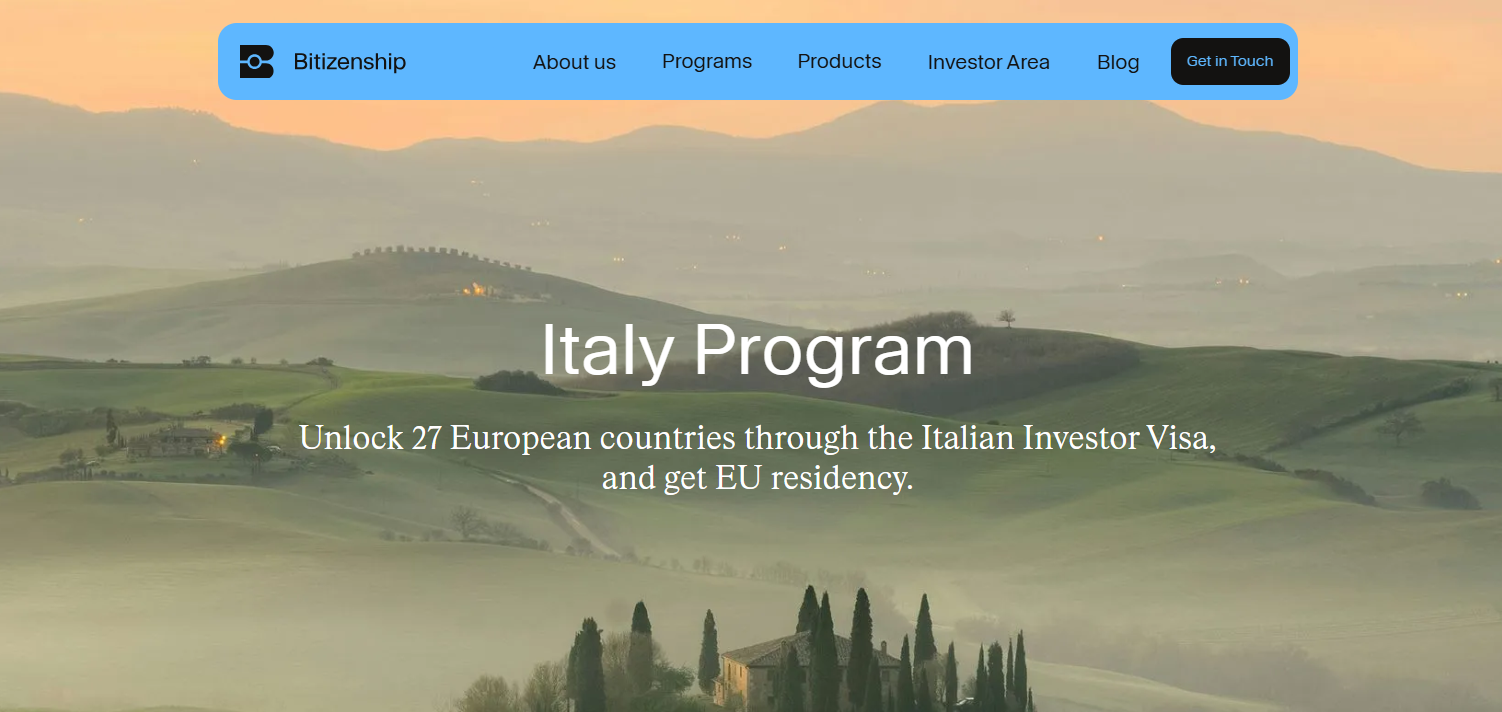
If a compliant, Bitcoin-aligned route into either country is what you are evaluating, our overview of Portugal residency by investment sets out every qualifying category after the real estate ban.
Conclusion
Dual citizenship in 2026 is legal for Americans, constrained mainly by the other country's rules rather than by US law.
The State Department does not ask you to choose, the courts have repeatedly held that citizenship cannot be stripped without intent, and the real friction sits in narrow professional contexts: security clearances, foreign military service, and foreign government posts.
Where the door closes is abroad, in Japan, China, India, Singapore, and, at naturalization, the Netherlands.
Portugal and Italy both keep it open, which is precisely why they anchor most American shortlists, and why Bitizenship structures Bitcoin-aligned investment vehicles in both. Descent is cheapest and narrowing.
Marriage is faster but not fast. Naturalization means actually living somewhere. Investment residency buys optionality, not a passport. Pick the route that matches what you are optimizing for, then verify every timeline against the country's own current law.
Get in touch if you want to talk through which pathway fits your situation.
Read Next:
- How to Get EU Citizenship in 2026: Descent, Residency, and Investment (Realistic Timelines)
- Best Countries for Expats in 2026, Ranked for Mobility, Tax, and a Path to Citizenship
- European Citizenship by Descent in 2026: Ireland, Italy, Poland
FAQs:
1. Does the United States allow dual citizenship?
Yes. The United States allows dual citizenship, and the State Department confirms that Americans may hold two or more nationalities. US law contains no requirement to choose, and naturalizing in another country does not by itself end US citizenship, because loss requires a voluntary act performed with the specific intent to relinquish. Dual nationals must enter and leave the US on a US passport and remain subject to the laws of both countries. Bitizenship works with American clients on this basis, structuring European residency pathways that add a second status rather than replacing the first.
2. Which countries do not allow dual citizenship in 2026?
China, India, Japan, and Singapore are the clearest examples of countries that do not allow dual citizenship for adults. China and India terminate citizenship automatically on acquisition of a foreign nationality, Japan requires a formal choice under Article 14 of its Nationality Act, and Singapore requires renunciation by age 21. The Netherlands sits in a middle category, generally requiring renunciation at naturalization while permitting several exceptions. Bitizenship's Portugal and Italy programs both operate in jurisdictions that permit dual citizenship without renunciation.
3. Can a US security clearance holder have dual citizenship?
Yes, though it requires care. Under Security Executive Agent Directive 4, foreign citizenship alone is not disqualifying, and dual citizens are no longer required to surrender a foreign passport. Guideline C, Foreign Preference, examines whether your conduct suggests a preference for another country, so active exercise such as voting abroad, traveling on the foreign passport, or accepting foreign government benefits draws more scrutiny than dual citizenship acquired passively at birth. Clearance holders also carry reporting obligations under SEAD 3. Bitizenship recommends that anyone holding or seeking a clearance take specialist advice before applying for any second nationality.
4. Do Portugal and Italy allow dual citizenship?
Yes. Portugal has permitted dual citizenship under Lei 37/81 for decades, and Italy has permitted it under Law 91/1992, so Americans pursuing either pathway are not asked to renounce their US nationality. That is a meaningful contrast with renunciation countries, where a second passport is a trade rather than an addition. Portugal's route runs through a Golden Visa-eligible fund investment with permanent residency eligibility after five years, while Italy's Investor Visa is a residency-by-investment route where naturalization requires ten years of continuous legal residence. Bitizenship structures investment vehicles in both countries, subject to program requirements and applicable law.
5. Is dual citizenship the same as renouncing US citizenship?
No, and the two should never be confused. Dual citizenship means adding a second nationality while keeping your US passport, whereas renunciation means formally giving up US citizenship through a Certificate of Loss of Nationality. The State Department reduced the renunciation fee from $2,350 to $450 effective 13 April 2026, but covered expatriates still face a mark-to-market exit tax, and roughly 4,820 Americans renounced in 2024 against millions living abroad. Renunciation is irreversible and typically requires holding another citizenship first. Bitizenship's programs are built around acquiring additional residency and potential citizenship eligibility, not around renouncing US nationality.
Disclaimer:
This article is published by Bitizenship for informational and educational purposes only. It reflects Bitizenship's perspective on the investment migration market and is not intended as legal, tax, immigration, investment, or financial advice, nor as an offer or solicitation to subscribe to any investment product. Comparisons with other firms are based on publicly available information and our own assessment of structural differences in business models. We have aimed for accuracy, but descriptions of programs, regulations, and competitor offerings are necessarily summaries and may not capture every legal nuance. Program terms, eligibility criteria, processing times, tax regimes, and regulatory frameworks change frequently and vary by individual circumstances. The Bitcoin Dolce Visa involves an equity investment in Bitizenship Italia S.r.l., an Italian private company. Any investment decision should be made only after reviewing the official documentation and consulting independent legal, tax, and financial advisors qualified in the relevant jurisdictions. Past performance does not guarantee future results. Capital is at risk. Residency and citizenship outcomes depend on meeting all legal, language, residency, and integration requirements set by the relevant authorities and are never guaranteed. Always refer to official government and regulatory sources, and engage qualified professionals before acting on any information in this article.


Gain residency and citizenship for you and your family. Enjoy the freedom to live, work, do business.
