Top 7 Benefits of Moving to San Marino for Digital Nomads

Moving to San Marino for digital nomads is one of the most overlooked relocation strategies in Europe, and it deserves far more attention than it gets.
More than 40 million people worldwide now work as digital nomads, according to estimates highlighted in 2026 (Source: World Economic Forum), yet most of them chase the same handful of destinations while a 61-square-kilometer republic perched inside Italy quietly offers a 7% flat tax on foreign income, ten-year residency permits, and a lifestyle most remote workers only dream about.
At Bitizenship, we help globally mobile investors and remote workers think strategically about where they base themselves, and San Marino keeps coming up in those conversations.
This guide breaks down the seven biggest benefits of relocating to Europe's oldest republic, plus the trade-offs you should understand before packing your laptop.
Key Takeaways
- San Marino offers a 7% flat tax on foreign income for qualifying new residents.
- Europe's oldest republic sits inside Italy, giving nomads an Italian lifestyle base.
- Residency routes include atypical residence, elective residence, and a startup visa.
- San Marino is not in the EU, so residency confers no EU-wide rights.
- Bitizenship helps digital nomads compare moving to San Marino with EU residency pathways.
Why Digital Nomads Are Looking Beyond the Usual Hotspots
The digital nomad market has matured, and the destinations that defined its first decade are showing their age. Lisbon, Barcelona, and Bali are more crowded and more expensive than ever, and remote workers are increasingly shopping for jurisdictions the way investors shop for assets: on fundamentals, not hype.
The numbers behind this shift are striking:
- Around 60 countries now offer some form of digital nomad visa or remote-worker residency program as of 2026.
- In the United States alone, 18.5 million workers identified as digital nomads in 2025, up 153% since 2019 (Source: MBO Partners).
- Most nomad visa programs require minimum monthly incomes between roughly €2,000 and €5,000, which means the average applicant can qualify almost anywhere and can afford to be selective.
With that much choice, the smartest remote workers are no longer asking "which country will let me in?" but "which country actually improves my tax position, my lifestyle, and my long-term options?" That is the same logic that drives investors toward the best Italian cities for relocation, and it is exactly the lens through which San Marino starts to look very interesting.
San Marino at a Glance: Europe's Oldest Republic
Before the benefits, it helps to understand what San Marino actually is, because it is one of the most unusual jurisdictions in Europe. Founded in 301 AD, the Republic of San Marino is the world's oldest surviving republic: a landlocked microstate of roughly 61 square kilometers and about 34,000 residents, completely surrounded by Italy between the Emilia-Romagna and Marche regions.
A few structural facts matter for anyone considering a move:
- San Marino is an independent sovereign state, not part of Italy.
- It uses the euro through a monetary agreement with the EU, but it is not an EU member state.
- It is not part of the Schengen Area, although there are no hard border controls with Italy in daily practice.
- Its economy runs on banking, manufacturing, tourism, and services, with a GDP per capita among the highest in the world.
- Personal income tax under the ordinary regime reaches 35%, but special regimes for new residents change that picture dramatically.
In other words, San Marino combines microstate agility with an enviable location in the heart of Italy, a combination that few European residency pathways can replicate. That context sets up the seven benefits that follow.
The Top 7 Benefits of Moving to San Marino for Digital Nomads
Each of the benefits below stands on its own, but together they explain why a growing number of location-independent workers are giving this tiny republic a serious look.
1. A 7% Flat Tax on Foreign-Source Income
The headline benefit is fiscal. Under San Marino's atypical residence regime, qualifying new residents can access a simplified flat tax of 7% on foreign-source income, with a minimum annual payment of €10,000 and a cap of €100,000.
Key features of the regime include:
- The 7% rate applies to income generated outside San Marino, which describes most digital nomad earnings by definition.
- Applicants generally must not have been tax residents of San Marino before, must hold valid health insurance, and must earn income from abroad.
- The €100,000 annual cap makes the regime especially attractive for high earners, similar in spirit to the flat tax regimes that have made other jurisdictions famous.
For a remote worker billing international clients, paying 7% instead of Western Europe's typical 40%+ marginal rates is transformational, and it compares favorably even with the tax angles investors study in guides to Golden Visa tax benefits elsewhere in Europe.
As always, individual circumstances vary, so professional tax advice is essential before relocating.
2. An Italian Lifestyle Base Without Italian Bureaucracy
San Marino is entirely surrounded by Italy, which means daily life delivers everything people love about the Italian peninsula: the food, the climate, the Adriatic coast at Rimini about 20 minutes away, and Bologna's international airport roughly 90 minutes by road.
Practical advantages of the location include:
- Beach towns, ski areas, and two of Italy's culinary capitals (Bologna and the Romagna region) within easy reach.
- Florence, Venice, and Rome are all accessible for weekend trips.
- A small-state administration that is often faster and more personal than dealing with a large national bureaucracy.
You effectively get Italy as your playground while dealing with a government sized for 34,000 people, which is a rare combination in Europe.
3. Safety and Quality of Life at a Microstate Scale
San Marino consistently ranks among the safest places in Europe, with very low crime, strong public services, and a tight-knit community where newcomers become recognizable faces quickly.
For digital nomads, that translates into:
- A calm, secure environment that suits long focused work blocks.
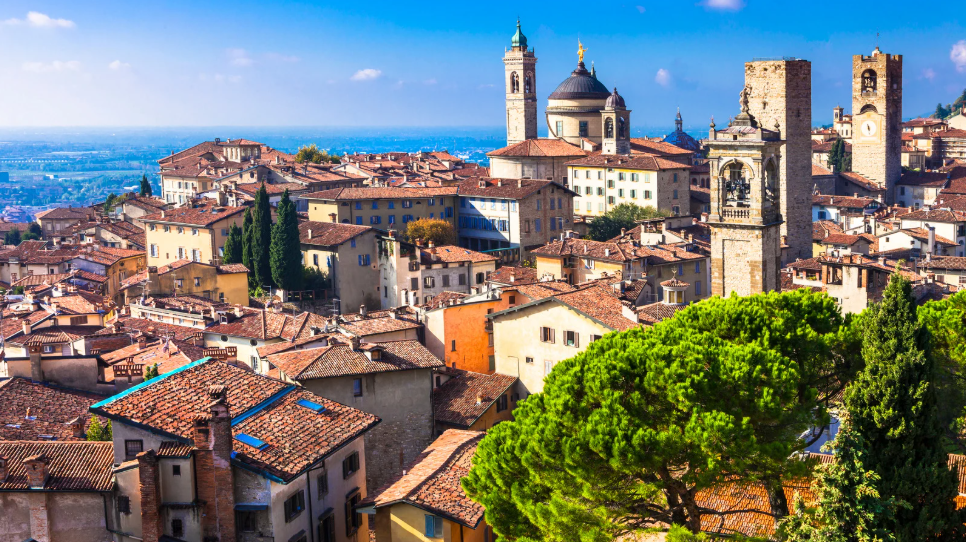
- Clean air, medieval hilltop scenery, and UNESCO-listed historic center views from Monte Titano.
- A pace of life that supports the work-life balance most nomads left home to find.
If your ideal base is quiet, beautiful, and safe rather than loud and hyper-social, San Marino plays to those preferences better than almost any capital city on the nomad circuit.
4. A Euro Economy With High Purchasing Power
San Marino uses the euro under a formal monetary agreement with the EU, so there is no currency friction for anyone earning or spending in euros, and its economy is prosperous, with GDP per capita figures that rival the strongest economies in the world.
That brings several practical wins:
- No exchange-rate risk for nomads billing European clients in euros.
- A stable, developed banking and financial services sector accustomed to international residents.
- Day-to-day costs that are generally comparable to neighboring Italian regions rather than to Switzerland or Monaco.
You get microstate advantages without microstate price tags, which matters when you are optimizing both income and expenses.
5. Multiple Residency Routes With Long Validity
Unlike countries that funnel all remote workers into a single visa category, San Marino offers several distinct doors, and some of them come with unusually long validity periods.
The main options reported for the republic include:
- Atypical residence for people earning foreign-source income, the route most relevant to digital nomads and linked to the 7% flat tax regime.
- Elective residence through a real estate purchase of at least €500,000, valid for ten years with family inclusion.
- Elective residence through an investment of around €600,000 in state securities or funds, also with ten-year validity.
- A startup route for entrepreneurs launching high-tech businesses, with modest formal investment requirements but a 181-day annual presence expectation.
A ten-year permit horizon is exceptional by European standards, where most nomad visas run one to two years, and it gives long-term planners real certainty. Requirements and conditions change, so verify the current rules with official San Marino sources before committing.
6. An Innovation-Friendly, Blockchain-Curious Jurisdiction
San Marino has spent recent years positioning itself as a niche innovation hub, including an early regulatory framework for blockchain-based enterprises introduced through its national innovation institute in 2019. For Bitcoin-aligned remote workers, that posture matters.
Signals worth noting:
- A dedicated innovation institute tasked with attracting technology companies to the republic.
- A blockchain framework designed to give distributed ledger businesses legal clarity.
- A general openness, common to microstates, to court entrepreneurs and digital talent that larger countries take for granted.
It is a similar philosophy to the one behind structures like the Bitcoin Dolce Visa in neighboring Italy: small, agile jurisdictions and innovative vehicles can serve Bitcoin-aligned professionals better than one-size-fits-all systems. San Marino is not a crypto haven, but it is a jurisdiction that has thought seriously about the digital economy.
7. Small-State Agility and Direct Access
In a republic of 34,000 people, the distance between a new resident and the institutions that govern daily life is tiny, and that changes the experience of being a foreigner.
In practice, this means:
- Administrative processes that involve people you can actually meet, rather than anonymous queues.
- Processing timelines for residency applications that are often measured in months, not years.
- A business community small enough that networking happens naturally.
For nomads used to fighting for appointment slots in overwhelmed immigration systems, the sheer human scale of San Marino is a benefit in its own right.
What to Consider Before Moving to San Marino
San Marino is compelling, but no honest guide should stop at the benefits, because the republic's limitations are just as structural as its advantages. The most important one is simple: San Marino is not in the European Union, and residency there is not EU residency.
Before committing, weigh these factors carefully:
- A San Marino permit does not grant the right to live or work across the EU, unlike EU residency programs such as the Portugal Golden Visa fund route.
- San Marino is outside the Schengen Area, so your residency does not create Schengen residency rights, even though daily movement through Italy is seamless in practice.
- Citizenship is effectively out of reach for most newcomers: naturalization is commonly reported to require decades of continuous residence, and San Marino does not permit dual citizenship.
- The housing market is tiny, and rental options are limited compared with any normal city.
- Outside the special regimes, ordinary income tax rates reach 35%, so qualifying for the right regime is essential.
None of this makes San Marino a bad choice, but it makes San Marino a lifestyle and tax decision rather than a long-term citizenship strategy, and that distinction should shape how you use it.
San Marino or an EU Pathway? Where Bitizenship Fits In
For many digital nomads, especially Bitcoin holders thinking in decades, the real question is not "San Marino: yes or no?" but "what combination of bases and residencies gives me the most optionality?" That is where an EU residency strategy comes in, and it is the problem Bitizenship was built to solve.
Two compliant, Bitcoin-aligned pathways are worth comparing against a San Marino move:
- Bitizenship's Portugal Fund, a Golden Visa-eligible private equity fund pathway built around a €500,000 investment connected to Portugal's Bitcoin ecosystem. Portugal requires only 14 days of stay every two years, offers permanent residency eligibility after 5 years, and provides a consequential pathway to citizenship afterward, subject to requirements. See the full Portugal program details.
- The Bitcoin Dolce Visa, Bitizenship's Italian Investor Visa pathway, built around a €250,000 equity investment in Bitizenship Italia S.r.l., a Milan-based Bitcoin-focused Innovative Startup. Italy is a pure residency-by-investment route with no minimum stay requirement to maintain the visa, while citizenship requires 10 years of legal residence at 183+ days per year, subject to requirements. Explore the Italy program to learn more.
A nomad could even combine strategies: an EU residency pathway for long-term permanent residency and citizenship optionality, with San Marino or another base for lifestyle and tax purposes, always with proper professional advice. As Bitizenship co-founder Alessandro Palombo puts it:
"Most people save for a second home. The smartest ones save for a second passport. One gives you a better view. The other gives you and every generation after you options no amount of money can buy later."
Neither citizenship nor investment returns are ever guaranteed in any program, but the structural difference is clear: EU pathways build toward EU-wide rights, while San Marino optimizes the present.
Conclusion
Moving to San Marino for digital nomads delivers a rare package: a 7% flat tax on foreign income, ten-year residency options, microstate safety and agility, and the whole Italian peninsula as a backyard.
It is one of Europe's best-kept relocation secrets for remote workers who prioritize lifestyle and tax efficiency today. Its limits are equally clear: no EU rights, no realistic citizenship path, and a tiny housing market, which is why the sharpest nomads treat San Marino as one piece of a broader mobility strategy rather than the whole plan.
If you want to understand how a San Marino lifestyle base could sit alongside a compliant EU residency pathway in Portugal or Italy, get in touch with Bitizenship today.
Read Next:
- Can You Get Portugal Residency by Buying Property in 2026
- Portugal Golden Visa Investment Fund Route Explained
- Does Buying Property in Portugal Give You Residency?
FAQs:
1. Is moving to San Marino a good idea for digital nomads?
Yes, moving to San Marino can be an excellent choice for digital nomads who earn foreign-source income and prioritize tax efficiency, safety, and an Italian lifestyle. The republic offers a 7% flat tax regime for qualifying new residents, long-validity residency options, and a location surrounded by Italy. Bitizenship recommends weighing it against EU residency pathways, since San Marino residency does not create EU-wide rights.
2. What taxes apply after moving to San Marino as a digital nomad?
Qualifying new residents earning foreign-source income can access San Marino's atypical residence regime, with a 7% flat tax, a €10,000 minimum annual payment, and a €100,000 cap. Ordinary personal income tax rates otherwise reach 35%. Rules change and individual situations differ, so Bitizenship always advises confirming current requirements with qualified local tax professionals before relocating.
3. Does moving to San Marino give digital nomads EU residency?
No, moving to San Marino does not grant EU residency, because San Marino is an independent microstate outside both the European Union and the Schengen Area. Daily travel through Italy is seamless in practice, but no EU-wide rights attach to a San Marino permit. For nomads who want EU permanent residency and a pathway to citizenship, Bitizenship structures compliant investment pathways in Portugal and Italy.
4. How much does moving to San Marino cost for digital nomads?
The cost of moving to San Marino depends on the route. The atypical residence regime is income-based, with a minimum €10,000 annual flat tax payment, while elective residence requires roughly €500,000 in real estate or around €600,000 in state securities. Day-to-day living costs are broadly comparable to neighboring Italian regions. Bitizenship can help you compare these figures against EU residency-by-investment thresholds.
5. What are the alternatives to moving to San Marino for digital nomads?
The strongest alternatives to moving to San Marino are EU residency-by-investment pathways that build long-term rights. Bitizenship offers two: the Portugal Fund, a €500,000 Golden Visa-eligible private equity pathway with permanent residency eligibility after 5 years and a consequential pathway to citizenship, and the Bitcoin Dolce Visa, a €250,000 equity investment in a Milan-based Bitcoin-focused Innovative Startup with no minimum stay requirement to maintain the visa.
Disclaimer:
This article is published by Bitizenship for informational and educational purposes only. It reflects Bitizenship's perspective on the investment migration market and is not intended as legal, tax, immigration, investment, or financial advice, nor as an offer or solicitation to subscribe to any investment product. Comparisons with other firms are based on publicly available information and our own assessment of structural differences in business models. We have aimed for accuracy, but descriptions of programs, regulations, and competitor offerings are necessarily summaries and may not capture every legal nuance. Program terms, eligibility criteria, processing times, tax regimes, and regulatory frameworks change frequently and vary by individual circumstances. The Bitcoin Dolce Visa involves an equity investment in Bitizenship Italia S.r.l., an Italian private company. Any investment decision should be made only after reviewing the official documentation and consulting independent legal, tax, and financial advisors qualified in the relevant jurisdictions. Past performance does not guarantee future results. Capital is at risk. Residency and citizenship outcomes depend on meeting all legal, language, residency, and integration requirements set by the relevant authorities and are never guaranteed. Always refer to official government and regulatory sources, and engage qualified professionals before acting on any information in this article.
Gain European residency and citizenship for you and your family. Enjoy the freedom to live, work, do business.
